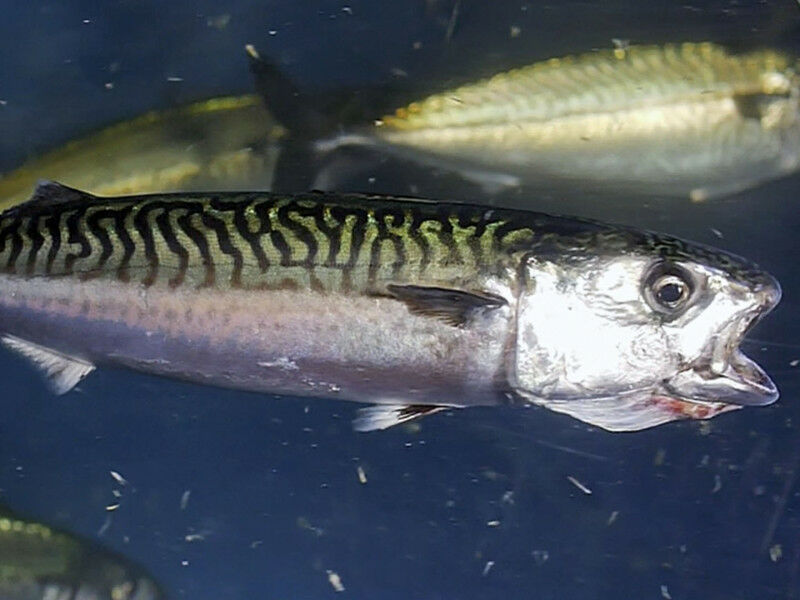
 Filter feeding fish - have a so-called ’gill raker system’ in their mouths that filters small particles.
European Research Council supports the development of a microplastic filter for washing machines. Filter feeding fish - have a so-called 'gill raker system' in their mouths that filters small particles. Photo: Leandra Hamann / University of Bonn all images in original size . Alexander Blanke from the Institute of Evolutionary Biology and Ecology at the University of Bonn has been awarded a Proof of Concept Grant (PoC) by the European Research Council (ERC). This program provides financial support of 150,000 euros over a maximum period of 18 months to help researchers transfer their ideas from previous ERC projects involving outstanding basic research to commercial applications. These grants thus specifically promote the transfer of knowledge and scientific spin-offs or "sciencepreneurship." The newly approved project "Development of a biomimetic prototype to reduce microplastics emissions" (SuspensionFlow) has the aim of developing an innovative prototype for a microplastic filter for washing machines and other applications. "In the SuspensionFlow project, we want to develop a technology inspired by a mechanism found in some fish to filter out microplastic from wastewater, especially microplastic found in the drainage water of washing machines," says Alexander Blanke of the University of Bonn.
TO READ THIS ARTICLE, CREATE YOUR ACCOUNT
And extend your reading, free of charge and with no commitment.
Your Benefits
- Access to all content
- Receive newsmails for news and jobs
- Post ads