


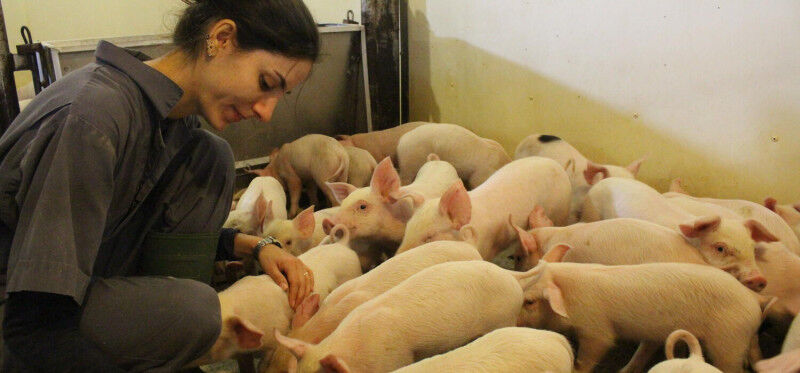
With a research initiative, funded by Open Philanthropy, Ceballos is exploring immuno-castration; a revolutionary alternative to the traditional, often painful, castration of livestock. Already embraced by many countries worldwide, this method not only promises to elevate animal welfare, but also brings economic advantages to producers and consumers.
Understanding immuno-castration
Immuno-castration is a pharmaceutical innovation that triggers the production of antibodies that work against reproductive hormones, effectively halting puberty in animals. This approach curbs aggression, eases housing and handling, and prevents unwanted mating, particularly beneficial in male livestock.For pigs, it also eliminates ’boar-taint,’ an accumulation of hormones that can lead to unpleasant odors and flavors in meat from post-pubescent pigs.
Unlike traditional castration methods, which involves painful removal of testicles while animals are conscious, immuno-castration requires just two injections and causes no tissue damage.
Method has global appeal
This vaccine is commercially available and approved for use in pigs in over 60 countries, and has been used in Canada since 2012. In some countries, it is also available for cattle, but its use depends on local regulatory approval.The method is also being explored for use in:
- sheep
- goats
- horses
- wildlife
Countries such as Colombia and Brazil have successfully integrated immuno-castration into their pig production systems, with adoption rates at an impressive 90 per cent and 84 per cent, respectively.
Dr. Ceballos emphasizes the significance of learning from these global leaders. "Understanding the drivers, benefits, and challenges behind the widespread adoption of immun-ocastration in these countries, and how they successfully implemented it, can provide valuable insights to inspire behavioural changes in nations where its use remains limited, ultimately benefiting the entire pig value chain," she says.
The Canadian context
In Canada, immuno-castration is utilized in about 25 per cent of the produced male pigs, with higher adoption rates among female pigs. Dr. Ceballos is determined to uncover factors driving its use and identify any obstacles hindering broader adoption within the Canadian swine industry."Our research aims to pinpoint who is using it, what motivates them, and the challenges they face, so we can identify bottlenecks preventing its wider implementation," she explains.
Benefits for All
The advantages of immuno-castration extend across the entire production chain. Animals benefit from reduced pain, risk of infections and diseases associated with surgical procedures, leading to significantly improved welfare. Producers see gains in growth efficiency and feed utilization in immuno-castrated males, while consumers enjoy higher quality meat; leaner, juicier, and more tender.Furthermore, this method promotes sustainability, with a carbon footprint reduction of up to 3.6 per cent compared to traditional practices.
Research looks at animal welfare
In today’s world, animal welfare has become a pivotal factor in consumer choices, and UCVM is at the forefront of addressing this critical concern. Immuno-castration represents a superior alternative, a technology poised for broader development and adoption.It offers a compassionate solution that enhances the welfare of livestock while delivering economic and quality benefits throughout the production chain.
Through initiatives like Dr. Ceballos’s research, UCalgary is setting the stage for change in the swine industry and beyond. By integrating scientific advancements with practical, economically viable solutions, the university is leading the way in creating a more sustainable and humane future for Canadian livestock production.