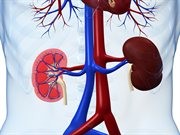
A picture of the kidneys
Experts from the Medical Research Council (MRC) Centre for Transplantation at King's have revealed exciting new scientific developments for people with an organ transplant, intended to help prevent rejection of the new organ and extend its life. Watch a video of the research. They discussed two pioneering areas of research, at an event at the British Science Festival in Birmingham, that they hope will have a significant impact on transplant medicine and patients in future - techniques known as protein therapeutics and cell therapy. Although organ transplantation has been taking place for over 50 years, there are a number of significant challenges, such as a shortage of donor organs, maintaining the quality of an organ in transit, and the risk of organ rejection both immediately after transplant and in the following years. The event entitled 'Extending the life of the transplant' was facilitated by broadcaster and writer Vivienne Parry. Sue Townsend, author of the Adrian Mole books, spoke about her experience as a recipient of a donor kidney and gave away copies of a new Adrian Mole short story, which she had written especially for the debate. Protein therapeutics The work using protein therapeutics aims to reduce the risk of an organ being damaged in the hours and days following a transplant, by maintaining the quality of the donor organ prior to transplantation.
TO READ THIS ARTICLE, CREATE YOUR ACCOUNT
And extend your reading, free of charge and with no commitment.