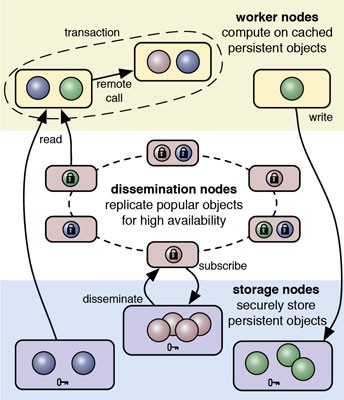
Nodes (locations on a computer network) in Fabric pass around objects that contain data and program code, but the objects have built-in rules about what each node can do with them. The Fabric language requires programmers to include these rules and saves them the work of writing code to enforce them.
As we become increasingly dependent on computers to manage our lives and businesses, our money and privacy become less and less secure. But now, Cornell researchers offer a way to build security into computer systems from the start, by incorporating security in the language used to write the programs. Until now, computer security has been reactive, said Fred Schneider, the Samuel B. Eckert Professor of Computer Science. When hackers discover a way in, we patch it. "Our defenses improve only after they have been successfully penetrated," he explained. "When problems arise, we patch software like putting on duct tape," added collaborator Andrew Myers, professor of computer science. "By now we have layers of duct tape, and the system is a mess.
TO READ THIS ARTICLE, CREATE YOUR ACCOUNT
And extend your reading, free of charge and with no commitment.