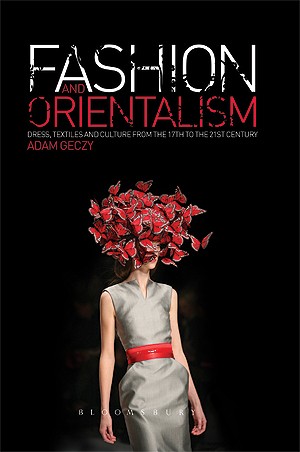
The ’Orient’ has always been more of a place of imagination than a geographic place, argues Adam Geczy in his new book.
A new book by Adam Geczy , an artist and a lecturer at the Sydney College of the Arts , is the first comprehensive survey of Orientalism in fashion. Titled Fashion and Orientalism , Geczy's book sees fashion as a history of cross-pollination, exchange - and sometimes outright stealing - between the East and the West. The book begins with the startling fact that almost every name for pre-synthetic textiles now taken for granted in the West - including cotton, satin, damask, muslin, chintz and jute - derives from Middle Eastern or Asiatic roots. It goes on to trace the evolution of fashion in the (always fluid) spheres of 'East' and 'West'. Geczy shows readers how fashion - and the associated trade in materials and goods - rather than being a peripheral frippery of history, has often played a central role in the rise and fall of markets, cities, courts and even empires. For example, while cotton, silks and other materials were coveted luxuries in the West from as early as the 13th century, by the 1840s exports from an industrialising England to China and Africa eclipsed those of India. In response to this imbalance of trade, "the competitive rallying point for the Orient was quality," writes Geczy.
TO READ THIS ARTICLE, CREATE YOUR ACCOUNT
And extend your reading, free of charge and with no commitment.