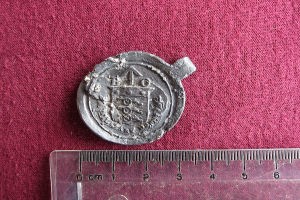
One of the bale seals
A series of archaeological finds in Tasmania have shown how colonial guards secretly eased the brutal treatment of women prisoners in 1850s Australia, rewriting our understanding of life inside Britain's colonial prisons Down Under. University of Manchester archaeologist Eleanor Casella says the find of textile manufacturing paraphernalia in a Tasmanian prison nursery proves women prisoners were allowed informal with their babies - a contravention of official British policy for the management of imperial convicts. Casella had spotted three intact lead bale seals while excavating the nursery of the Ross Female Factory, a heritage-listed prison which confined British criminal women and their children exiled to Van Diemen's Land - now Tasmania. They were put to use making convict uniforms out of cotton and woollens imported from the textile factories of north-west England. The lead seals - which prevent theft from the bolts of cloth during export down to the penal colonies -were found alongside fragments of buttons, sewing pins and thimbles. Casella has been excavating at the Ross Factory site for over 15 years. She said: "Strict official regulations kept criminal mothers separated from their children.
TO READ THIS ARTICLE, CREATE YOUR ACCOUNT
And extend your reading, free of charge and with no commitment.