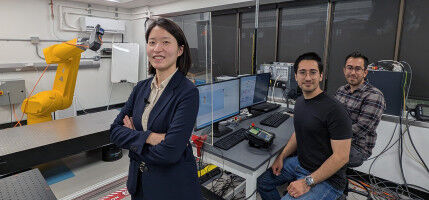
Aghababaei: ‘Our research will have direct industrial applications.’
An EPFL study has deepened our understanding of the fine particles produced by adhesive wear. This breakthrough could lead to cost savings and environmental benefits. Adhesive wear occurs when two surfaces - such as a brake pad and a wheel's disc, or a car tire and the road - rub against each other. Why is this a concern? Because the rubbing action generates millions of fine particles that can cause serious problems, such as respiratory illnesses. The formation of this debris also means that the materials get worn down, which eventually leads to both financial and energy-related losses. In 2016, researchers from both the Computational Solid Mechanics Laboratory (LSMS) of the Swiss Federal Institute of Technology in Lausanne (EPFL) and Cornell University used computer simulations to identify how these particles form. This initial breakthrough, which was published , laid the groundwork for a new field of study in the broader science of tribology.
TO READ THIS ARTICLE, CREATE YOUR ACCOUNT
And extend your reading, free of charge and with no commitment.
Your Benefits
- Access to all content
- Receive newsmails for news and jobs
- Post ads