A team of researchers led by John Rogers, the Lee J. Flory-Founder Chair in Engineering at Illinois, has developed biocompatible silicon devices that could mark the beginning of a new wave of surgical electronics.
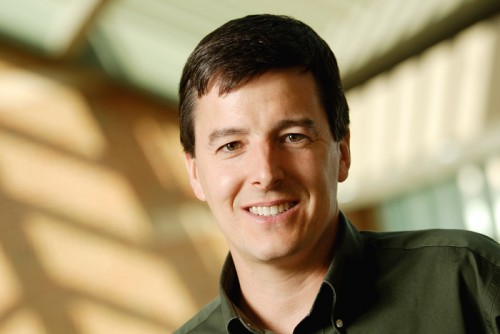
A team of researchers led by John Rogers, the Lee J. Flory-Founder Chair in Engineering at Illinois, has developed biocompatible silicon devices that could mark the beginning of a new wave of surgical electronics. Photo by Thompson-McClellan CHAMPAIGN, Ill. Arrhythmic hearts soon may beat in time again, with minimal surgical invasion, thanks to flexible electronics technology developed by a team of University of Illinois researchers, in collaboration with the University of Pennsylvania School of Medicine and Northwestern University. These biocompatible silicon devices could mark the beginning of a new wave of surgical electronics. Co-senior author John Rogers, the Lee J. Flory-Founder Chair in Engineering Innovation and a professor of materials science and engineering at Illinois, and his team will publish their breakthrough in the cover story of the March 24 issue of Science Translational Medicine. Several treatments are available for hearts that dance to their own tempo, ranging from pacemaker implants to cardiac ablation therapy, a process that selectively targets and destroys clusters of arrhythmic cells. Current techniques require multiple electrodes placed on the tissue in a time-consuming, point-by-point process to construct a patchwork cardiac map.
TO READ THIS ARTICLE, CREATE YOUR ACCOUNT
And extend your reading, free of charge and with no commitment.