The Diversity Days 2025 were devoted to raising awareness of work-life balance issues and queer communities
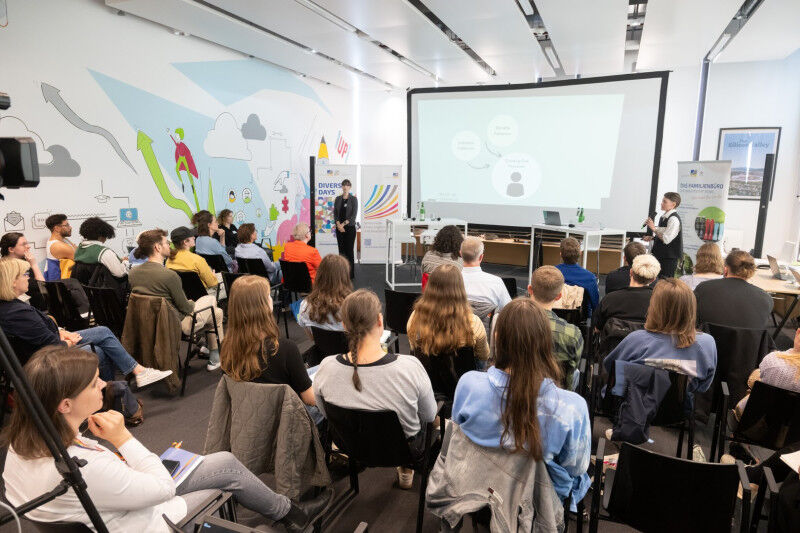
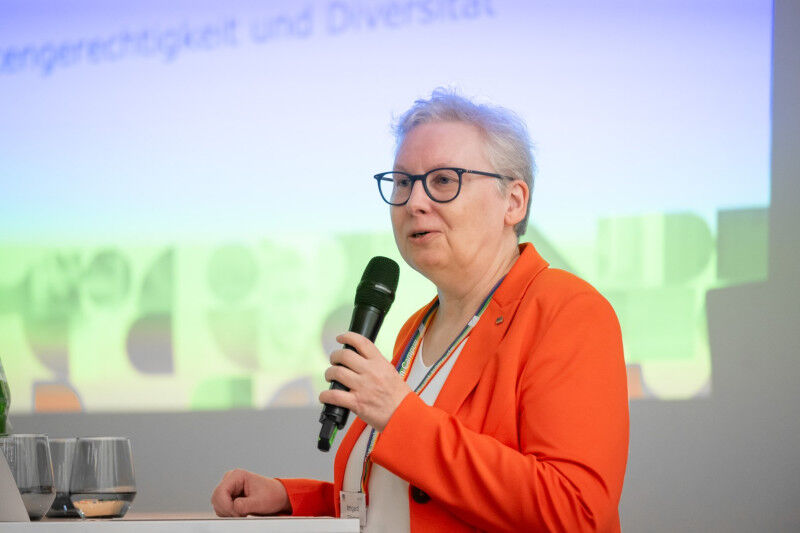
In her remarks at the opening of the event, Professor Irmgard Förster, Vice Rector for Equal Opportunity and Diversity, emphasized that "Family is not a monolithic concept." The diversity that characterizes University staff and students, the Vice Rector observed, is reflected in the many different family models they are part of, including patchwork, rainbow, single parents, multi-generational arrangements and the traditional nuclear family. Caregiving is still predominantly left up to women, which in many cases means they end up giving up their academic career. "Our aim," Professor Förster explained, "is to create structures that afford a better balance between caregiving responsibilities and having an academic career."
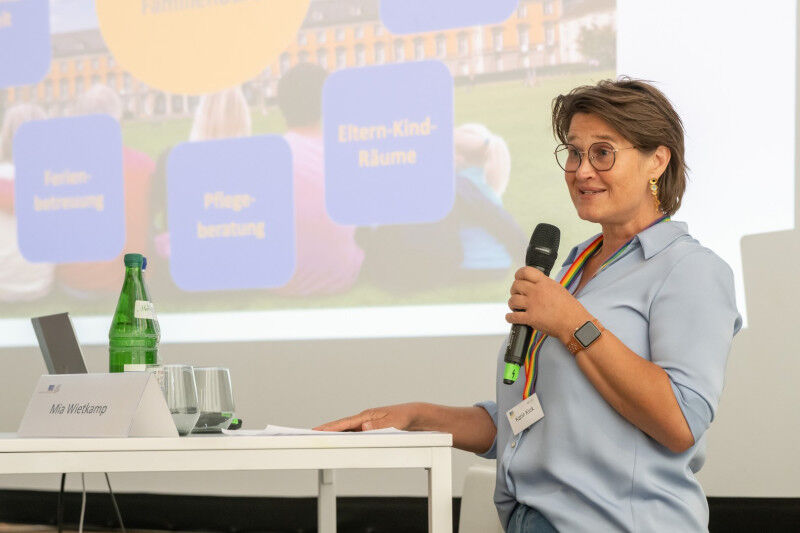
In line with this aim, this time around the Vice Rectorate and the Equal Opportunity and Diversity Unit organized the Diversity Days in partnership with the University of Bonn Office of Family Services. Explaining the mission of the office, Head Karin Kick said, "We provide confidential, case-specific counseling and advice for every kind of family constellation." Among other services, the University of Bonn provides 144 daycare places and eleven parent-child rooms. In addition to childcare issues, University staff and students can contact the Office of Family Services about other caregiving-related matters, such as a monthly get-together for caregiving family members to talk and keep in touch with each other, organized by the office.
Support and solidarity within queer communities
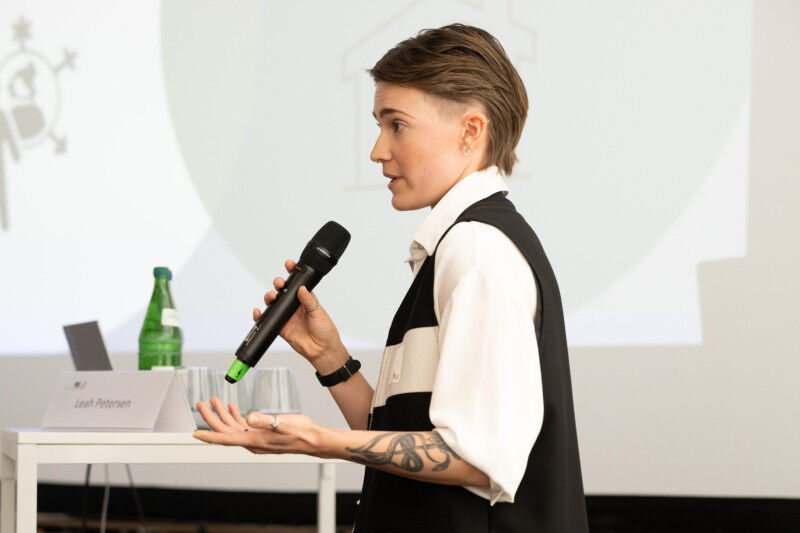
The Diversity Days 2025 were held in cooperation with Queeres Netzwerk NRW with sign language and German to English interpretation. A session titled "(Wahl-)Familien und queere Communities" ("Families (of Choice) and Queer Communities") was devoted to educating the public about alternative family models to the heteronormative mother-father-child(ren) constellation characterizing the traditional "nuclear family." Doctoral candidate Leah Petersen reported on her dissertation project on discrimination experienced by trans* people living with their parents. When a child comes out as trans*, Petersen explained, the parents usually have a negative reaction initially, and this experience of rejection by one’s parents and in society generally means that trans* people are at significantly greater risk of suffering both mental and physical illness. Being part of a queer community is thus crucial for many trans* people as a source of the support they need.
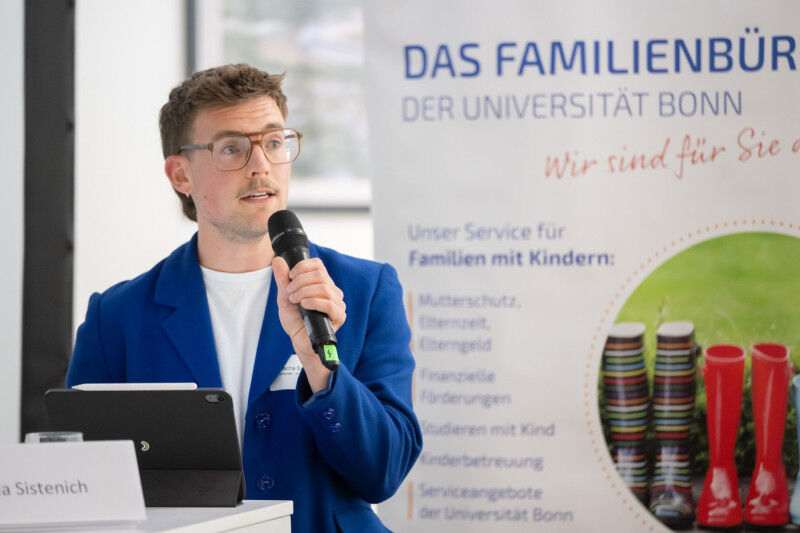
Queer communities were also the subject of a talk given by University of Bonn researcher Sascha Sistenich, who is working on a doctoral thesis about queer families of choice as a structure affording solidarity, support and security. The many interviews he has conducted for the thesis indicate how these structures can serve as communities of care that support the individual with transitioning, organizing medical care and dealing with societal misalignment. In the thesis paper he cites as example the "Houses" of the Ballroom community-which originally arose in the Black and Latinx trans* community of New York during the AIDS crisis-as places of both family affiliation and protection from discrimination and violence. Such communities of care can even exist to an extent in shared apartments, according to Sistenich, thus representing an alternative model to the traditional family for both queer and non-queer people.
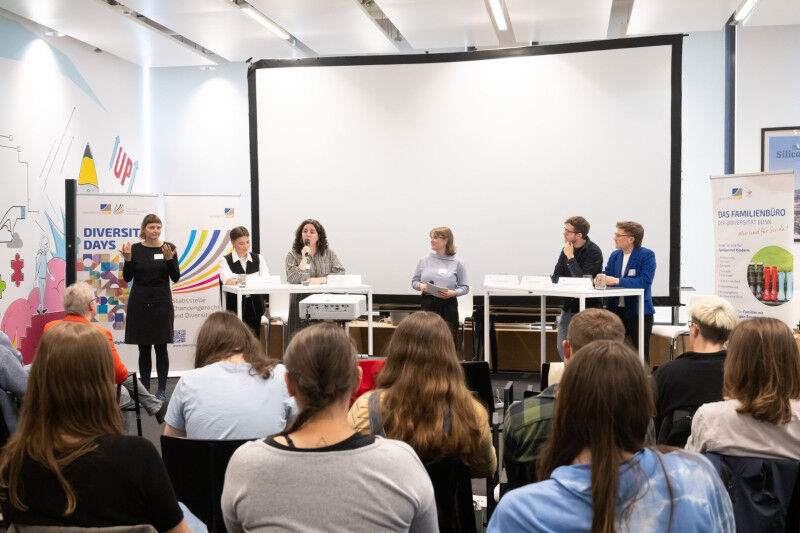
In the panel discussion held after his talk, Elissar Zanubia El-Marouk of Project Kiki & T* at the Integrationshaus talked about the importance of Ballroom culture for trans* Bi_PoCj (Black, indigenous, People of Color, Jewish) and the need for more counseling services and safe spaces for queer people who experience racism. Lenny Streit of Queeres Netzwerk NRW, Project Trans*sensibel emphasized how addressing trans* and non-binary issues in University administration and elsewhere can promote awareness, thereby countering discrimination. Petersen and Sistenich also engaged in a discussion of how universities can create an environment where queer people can feel safe and accepted like anyone else. One suggestion of Petersen’s is that teaching staff could state their pronouns the first time their course meets as a low-key encouragement to address issues of discrimination. Petersen also recommended expanding and crisis-proofing events and structures that enhance the visibility of queer people and promoting student engagement with queer issues.
Dr. Sarah Czerney and Lena Eckert then gave a reading titled "Elternschaft und Wissenschaft - Wege aus der Unvereinbarkeit" ("Parents in Academia: Achieving Greater Balance") that afforded insights into the structural disadvantagement suffered primarily by mothers* at universities. The temporary employment contracts, flexible project work and major publishing pressure characteristic of the academic world reveal that this is a system in which caregiving responsibilities have no place. That this is the case is underscored by the fact that over 70% of professorships in Germany are still held by men. These hurdles lead many women to eventually give up on their academic career-in StEM fields roughly half of all female German researchers.
World Café talk on Diversity Strategy
The Diversity Days concluded with a social networking event with equal opportunity and diversity stakeholders at the University of Bonn.