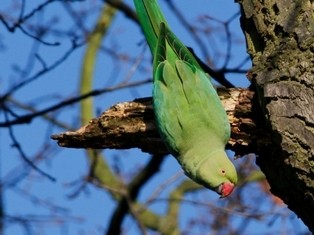
Rose-ringed parakeet (Psittacula krameri manillensis), originally from Asia and now found in London. Credit: Tim Blackburn
Rose-ringed parakeet (Psittacula krameri manillensis), originally from Asia and now found in London. Credit: Tim Blackburn Islands and mainland coastal regions are the world's hotspots for alien plant and animal species, according to new research. An international team of researchers, led by Dr Wayne Dawson in Durham University's Department of Biosciences , has provided the first global analysis of established alien species. Their study is published in the journal Nature Ecology & Evolution . The researchers say their findings show that more effective measures need to be put in place to prevent further introductions of invasive alien plants and animals into vulnerable ecosystems. Hotspots of established alien species The scientists studied existing data looking at eight groups including amphibians, ants, birds, freshwater fish, mammals, reptiles, spiders and vascular plants across 186 island and 423 mainland regions. Hotspots of established alien species were found mainly in island and coastal mainland regions, the research concluded.
TO READ THIS ARTICLE, CREATE YOUR ACCOUNT
And extend your reading, free of charge and with no commitment.