James Watkins
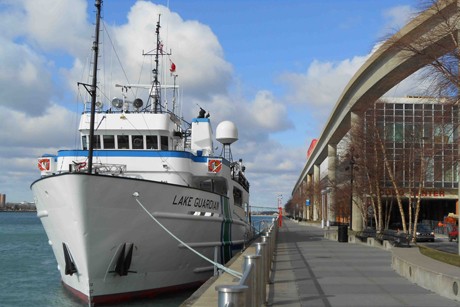
Undergraduates Ryan Rodriguez and Jonathan Hunn, prepare lake samples for water quality measurements, including readings of phosphorus, nitrogen, and silica. Cornell received three grants to collect data on the biology of the Great Lakes, information that continues long-term datasets and provides current measures for researchers, fishery managers and policymakers. For starters, Cornell and Buffalo State College researchers have received a five-year, $3.5 million grant from the Environmental Protection Agency's (EPA) Great Lakes National Program Office and the Great Lakes Restoration Initiative to survey lower trophic levels, or organisms at the bottom of the food chain that provide valuable insights into the health of higher species. Specifically, Cornell researchers are using a 180-foot EPA research vessel to collect phytoplankton, zooplankton and mysid shrimp (crustaceans) levels in all of the Great Lakes, while Buffalo State researchers will head up collecting benthos (fauna from the bottom of the lakes) levels. Other researchers are also sampling for such pollutants as mercury, nutrients from farm runoff, viruses and bacteria. The project continues work by the New York Department of Natural Resources (DNR) and the Cornell Biological Field Station (CBFS) to assess and research lower trophic levels in Lake Ontario, which started with the collaborations between Bob O'Gorman at U.S. Geological Survey (USGS) and Ed Mills at CBFS almost 30 years ago. "Part of the reason we got this large grant was because of our history of collecting data," said Lars Rudstam, professor of natural resources and the grant's principal investigator.
TO READ THIS ARTICLE, CREATE YOUR ACCOUNT
And extend your reading, free of charge and with no commitment.