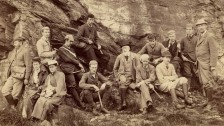
Sedgwick Club group photograph taken in Tan-y-bwlch, Wales, 1891
A display of material from the Sedgwick Museum records archive, on view to the public from tomorrow, offers a rare glimpse into the daily lives of the scientists who changed the way we think about the world around us. The best analogy of how an archivist approaches an archive is that of investigators arriving at a crime scene - you have to be really careful not to destroy any of the tiny clues within it." - —Sandra Marsh "The Queen Hotel (6/- per day - hot baths extra) was extremely comfortable, while a wide garden provided space for lounging and for cricket (week-days only)." So wrote Gertrude Elles (1872-1960), a geologist known for her work on graptolites, in 1914 describing a field trip to Dolywern in Wales with a group of Sedgwick Club members. She continued: "N.B. Future visitors should note that the establishment does not approve of sabbatical games; even the sheep do not talk before lunch time on Sunday, & our hammers alone broke the universal peace." The fragile leather-bound book containing Elles's account of an excursion in an era when life in Wales was regulated by stern Methodism, and Britain was on the brink of the First World War, is just one of many thousands of items held in the archive of the Sedgwick Museum of Earth Sciences. Today the Sedgwick Museum launches a display that gives visitors a glimpse into its extraordinary collections of records, made by generations of students and researchers, and given to the Museum (and the collections that preceded it) over a 300-year period.
TO READ THIS ARTICLE, CREATE YOUR ACCOUNT
And extend your reading, free of charge and with no commitment.