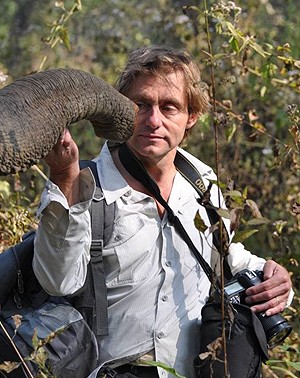
David Raubenheimer is a leader in the field of nutritional ecology research.
"Nutritional ecology is so central to every aspect of life that it should be considered a foundational part of biology in the same way evolution is." Professor David Raubenheimer, the first chair appointed to the Charles Perkins Centre , bases his claim for nutritional ecology on his lifetime's study of a vast variety of species to understand the causes and consequences of their food selection. His path was set when, as a master's student, he studied butterflies which exclusively fed on cyanide-producing plants. There was extensive literature written on plant toxicology but very little on the nutrients the plants provided to the animals feeding on them. The term nutritional ecology was coined in the 1980s when the importance of how animals access and use nutrients began to be understood. Since then Professor Raubenheimer has conducted groundbreaking research around the globe studying animals from gorillas to pandas, from sea otters to great white sharks, snow leopards and elephants. Among nutritional ecology's many important discoveries is that humans keep eating until they satisfy their need for protein, of obvious importance when considering how to address the obesity epidemic.
TO READ THIS ARTICLE, CREATE YOUR ACCOUNT
And extend your reading, free of charge and with no commitment.