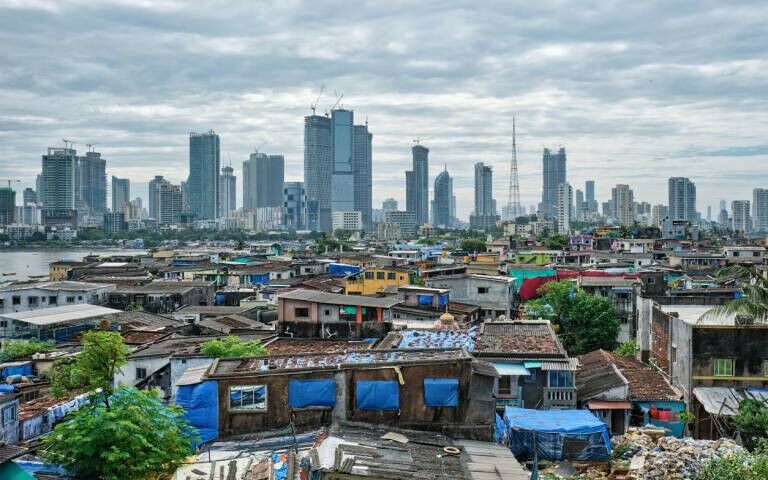
View of Mumbai skyline over slums in Bandra suburb
View of Mumbai skyline over slums in Bandra suburb - Inequality is linked to more greenhouse gas emissions and tackling inequality is an integral part of combatting climate change, argues a new study by researchers at UCL and Salem State University, Massachusetts. The research, published today in the peer-reviewed journal One Earth , identifies multiple pathways by which inequality leads to more emissions, bringing together evidence from different fields. On the one hand, the researchers argue, the choices of the wealthy drive up emissions, not only through their own consumption - with the world's richest 10% accounting for between 36% and 49% of global emissions - but also through their investment decisions. At the same time, the political power of wealthy shareholders and corporations in carbon-intensive industries enables them to obstruct climate policies that undermine their interests. At the other end of the income distribution, poor and financially insecure citizens are understandably fearful of the effects that climate policies might have on prices and jobs, which makes politicians reluctant to enact such policies. To tackle climate change, the researchers say, people need to work together and to authorise their governments to make far-reaching changes. Yet inequalities divide people and leave governments vulnerable to corruption, which undermines the social and political trust necessary for well-functioning democratic government.
TO READ THIS ARTICLE, CREATE YOUR ACCOUNT
And extend your reading, free of charge and with no commitment.