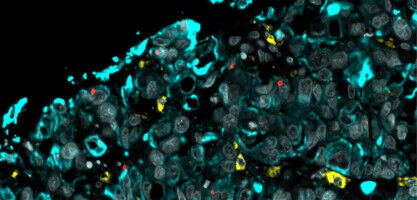
How can the universe of trillions of microbes that populate our bodies influence complex pathologies such as inflammatory diseases? And what happens when this delicate balance is disrupted, turning these tenants into potential disruptors? Prof. Samuel Nobs, researcher and director of the Microbiome and Immunity Interactions Laboratory at IRB (Institute for Biomedical Research affiliated with USI), explained this in an article written in collaboration with laRegione. Prof. Nobs reveals how the microbiome is not just a passenger, but a true co-pilot of our health and immune response, opening up new therapeutic perspectives.
When we hear the word "microbes," we often think of disease-causing germs. But microbes, tiny organisms such as bacteria, viruses, and fungi, are much more than just potential threats. In fact, many of them live inside and on the surface of our bodies, forming complex communities that play a crucial role in maintaining our health. However, when this balance is compromised, these same microbes can also contribute to various health problems, particularly inflammatory diseases.
Inflammation is our body’s natural way of protecting itself. When you cut your finger or catch a cold, your immune system springs into action, causing redness, swelling, and pain to help fight off dangerous invaders and repair the damage. Sometimes, inflammation becomes chronic, lasting for months or even years, and this long-term state of inflammation does not help us at all but instead harms us. Chronic inflammation is the basis of many serious diseases, including inflammatory bowel disease (IBD), rheumatoid arthritis, asthma, and type 1 diabetes. But what causes this uncontrolled inflammation? One of the answers may lie within us, in the microbes that live in our bodies.
Discovering the microbiome
The human microbiome is the collection of trillions of microbes that live on all surfaces exposed to the external environment. This includes our intestines, as well as our skin, mouth, and lungs. These microbes are not just passive passengers: they actively help us digest food, produce vitamins, and train our immune system; they even influence our mood and behaviour. Each person’s microbiome is unique and influenced by many factors, including genetics, daily diet, lifestyle, and medication use. A healthy and diverse microbiome tends to support the proper functioning of the immune system. But when this balance is disturbed, problems can arise.
From birth, our immune system learns to distinguish between "friends" and "enemies." Microbes play a key role in teaching our immune system to respond appropriately. Beneficial microbes help the immune system learn not to overreact to harmless substances such as pollen, food, or the body’s own cells. When the microbiome is healthy, it promotes a balanced immune response. However, it is believed that when the immune system is disturbed, it can become confused and chronically activated, triggering inflammation that can be harmful to the body.
How these particles contribute to disease
Let us examine some examples of how microbes are involved in specific inflammatory diseases. IBD: The intestine becomes chronically inflamed. Studies show that people with IBD often have lower levels of beneficial bacteria and higher levels of harmful bacteria. This imbalance can lead to an overactive immune response in the gut, causing pain, diarrhoea, and other symptoms. Researchers have found that introducing certain "good" bacteria or even faecal microbiota transplantation (transferring healthy stool into a patient’s gut) can help reduce inflammation and improve symptoms in some patients. Similarly, in rheumatoid arthritis, certain bacteria found in the mouth and gut have been linked to the development of the disease. In this autoimmune disease, inflammation of the joints occurs, and some scientists believe that these microbes may cause the immune system to attack joint tissue mistakenly. Finally, another key example where microbes are thought to influence inflammatory diseases is asthma. Children exposed to a wide range of microbes early in life are less likely to develop asthma and allergies. This phenomenon is known as the "hygiene hypothesis," which suggests that overly clean environments may prevent the immune system from developing properly. Without sufficient exposure to microbes early in life, the immune system can become hypersensitive, leading to chronic inflammation.
What is being done at the IRB to better understand their role?
Several factors may influence the composition and function of the microorganisms residing in our bodies in the context of inflammatory diseases. In most cases, the details of these interactions are entirely unknown. To better understand these open questions, we have recently established a new research group at the IRB that focuses on the interactions between the immune system and the microbiome. Our goal is to investigate whether and how these microbes can influence the development of such diseases. Our research generally focuses on understanding the development of diseases that affect the lungs. These include viral infections such as influenza or SARS-CoV2. It is known, for example, that the type of microbes present in the intestines of people with SARS-CoV2 infection is different from that of healthy individuals. Still, it is unclear whether this directly influences how people fight the infection. We are attempting to determine whether these microbes can directly regulate the body’s immune response to viruses and, if so, which molecules within these organisms are responsible for this function. In another project, we are also investigating whether the gut bacterial community undergoes changes in chronic lung inflammation associated with asthma and how these changes may contribute to exacerbating asthma symptoms, such as breathing difficulties. By understanding these interactions, we hope to one day harness these microbes to mitigate harmful inflammation in the body and restore a healthy balance to the immune system.
Can microbes be used to treat inflammation?
Although the use of microbes to improve health is still a prospect, it is currently one of the most exciting areas of modern medical research. Scientists are exploring various methods to utilise microbes or their products in the treatment of inflammatory diseases. One possible approach is to utilise "probiotics," which are live microbes that can be used to modify the community of microorganisms or restore a healthy microbiome in individuals with inflammatory diseases. Unfortunately, to date, there is no disease for which this method has been shown to work reliably. In some cases, such as taking probiotic supplements after using antibiotics, it can even delay the restoration of a healthy microbiome. However, it is hoped that a deeper understanding of the microbes that influence inflammatory diseases will lead to real health benefits for patients with IBD or asthma through the use of these special bacteria. Another area of application is the introduction of "prebiotics" into dietary plans: people introduce certain foods, such as fibre, to promote the growth of beneficial bacteria and reduce levels of harmful bacteria. This approach is very promising, as nutrition is a key factor in human health, and eating a varied diet rich in fruits, vegetables, whole grains, and fermented foods can promote a healthier microbiome and thus help reduce inflammation. The approach that has so far proven most effective in the clinical setting is faecal microbiota transplantation (FMT). This treatment involves transferring stool from a healthy donor into a patient’s gut. Faecal transplantation has shown excellent results in the treatment of a severe intestinal infection called Clostridium difficile and is currently being studied for the treatment of other inflammatory conditions.
A new frontier in medicine
We are only beginning to understand the overall impact of microbes on inflammation and disease. But what we know so far is already changing the way doctors think about health. Rather than simply treating symptoms, there is growing interest in treating the root cause: restoring the balance of the microbiome and calming the immune system. This does not mean that microbes are the sole cause of all’inflammatory diseases. Genetics, environment, and lifestyle also play important roles. But microbes are a key piece of the puzzle, and future treatments may include personalised microbiome-based therapies designed to prevent or reverse chronic inflammation. The relationship between microbes and inflammation is complex, but it is becoming increasingly clear that our tiny companions play a crucial role in maintaining our health. By understanding and cultivating our microbiome, we may discover new ways to prevent and treat some of the most prevalent and challenging diseases of our time. The next time you think about microbes, remember: they are not just germs, they are partners in your health.
Content produced by the Institute for Research in Biomedicine (IRB) in Bellinzona, affiliated with USI, on its 25th anniversary, in collaboration with laRegione .