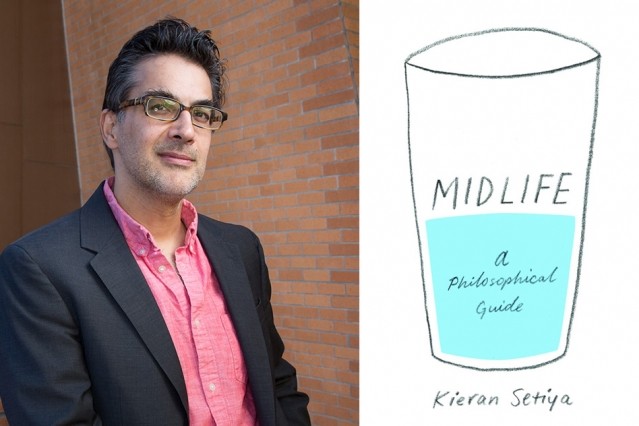
MIT philosophy Kieran Setiya has a new book, "Midlife: A Philosophical Guide," published by Princeton University Press. In it, he examines the problems of middle-aged happiness, reaches some unusual conclusions - he thinks we should embrace our regrets - and explores how philosophy can help people find peace of mind.
A few years ago, a man experienced a midlife crisis. He was professionally successful and had a rewarding family life, but still had a "hollow" feeling. Could he grind away at the same job indefinitely? Would he have to abandon his older hopes and dreams' And wasn't it disheartening to think his life might be halfway over? Fortunately, this person didn't quit his job, blow his life's savings on sports cars, or sabotage his personal relationships. Instead, he went to his office and pondered matters. "I was doing the things I had always wanted," explains MIT philosophy professor Kieran Setiya, the fellow suffering through the midlife malaise. "I wasn't wrong to think that teaching and writing and thinking about philosophy was worth doing, but nevertheless, something was amiss. The thing that gripped me first was a sense of hollowness in pursuit of projects.
TO READ THIS ARTICLE, CREATE YOUR ACCOUNT
And extend your reading, free of charge and with no commitment.