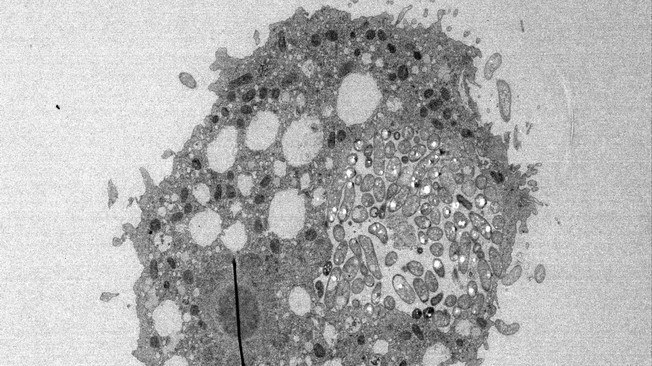
Electron micrograph of the cholera-causing pathogen inside an aquatic amoeba. Credit: Blokesch lab and BioEM facility
EPFL scientists have deciphered mechanisms that help the cholera bacterium to survive grazing predators in aquatic environments. The cholera-causing bacterium, Vibrio cholerae , is commonly found in aquatic environments, such as oceans, ponds, and rivers. There, the bacterium has evolved formidable skills to ensure its survival, growth, and occasional transmission to humans, especially in endemic areas of the globe. One of the ways the pathogen defends itself against predatory aquatic amoebas involves "hitchhiking" them and hiding inside the amoeba. Once there, the bacterium resists digestion and establishes a replication niche within the host's osmoregulatory organelle. This organelle is essential for the amoeba to balance its internal water pressure with the pressure exerted by the environment. In a new study, the group of Melanie Blokesch at EPFL in collaboration with the BioEM facility headed by Graham Knott has deciphered the molecular mechanisms that V. cholerae uses to colonize aquatic amoebas.
TO READ THIS ARTICLE, CREATE YOUR ACCOUNT
And extend your reading, free of charge and with no commitment.