Photo courtesy of Mads Bødker on flickr.
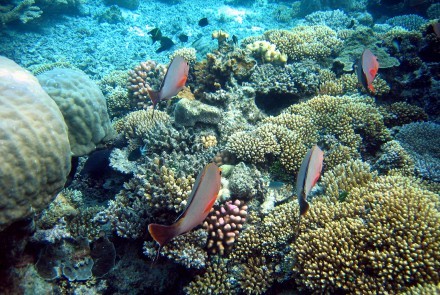
The Great Barrier Reef grew during the last ice age, even though the water temperatures were four to five degrees colder than today, a team of international scientists has found. "It was right at the colder limit of what corals can take, but the reef grew and developed from there," said Dr Helen McGregor, from ANU Research School of Earth Sciences. The research helps scientists better understand the resilience of the world-heritage listed Great Barrier Reef and how it copes with changing ocean temperatures. The news is cold comfort, however, as further and faster increases in temperatures are putting added stress on the Great Barrier Reef - the largest coral reef in the world. It is also suffering from ocean acidification, higher sediment loads and predators such as the crown of thorns starfish. "The corals survived a gradual temperature rise from 20,000 to 12,000 years ago. However we don't know if the reef will survive that change over the next 100 years," Dr McGregor said.
TO READ THIS ARTICLE, CREATE YOUR ACCOUNT
And extend your reading, free of charge and with no commitment.