 Bénédicte Lunven & Nour Halawani
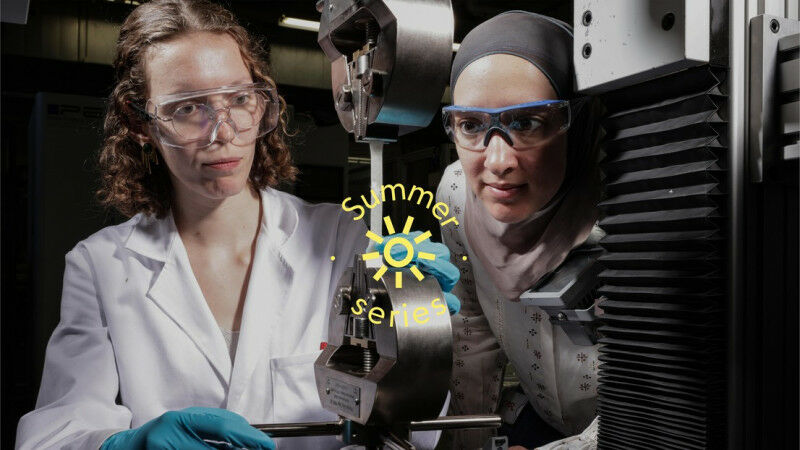
Bénédicte Lunven & Nour Halawani © 2023 Alain Herzog / EPFL STUDENT PROJECT - Bénédicte Lunven just finished her bacherlor's degree and already has a foot in the sustainable economy door. Bénédicte Lunven took our Zoom call from her well-deserved vacation in France. She just recently finished her bachelor's degree in Material Science at EPFL's School of Engineering, where her work with the Swiss company Composite Recycling had garnered the attention of her supervisor Professor Véronique Michaud. The Laboratory for Processing of Advanced Composites ( LPAC ) normally specializes in the creation of novel composite materials, but for the ecologically bent Bénédicte, working on recycling these environmentally troublesome materials was a proposal she couldn't turn down. The production of composites is energy intensive and often relies on non-renewable resources. To compound the ecological impact, since composites are made of two or more distinct materials, they are difficult to recycle. Separating the fibers from the matrix can be complex, requiring specialized equipment, highly trained workers, and a lot of heat.
TO READ THIS ARTICLE, CREATE YOUR ACCOUNT
And extend your reading, free of charge and with no commitment.
Your Benefits
- Access to all content
- Receive newsmails for news and jobs
- Post ads