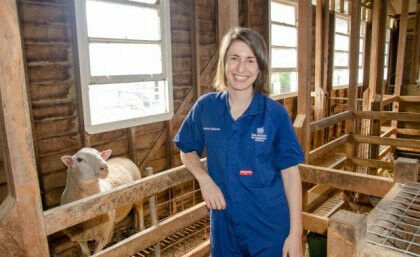
Dr Taylor Pini said only 5% of Australian sheep are bred using artificial insemination. Image, UQ.
Dr Taylor Pini said only 5% of Australian sheep are bred using artificial insemination. Image, UQ. Researchers at The University of Queensland are investigating ways to lift the low success rate of artificial insemination (AI) in sheep, which would improve wool and meat yields, sustainability, and enhance animal welfare. Lecturer in Veterinary Reproduction at UQ's School of Veterinary Science , Dr Taylor Pini , said artificial insemination of sheep was notoriously difficult, resulting in pregnancy rates below 30 per cent. "Unlike most domesticated species, we can't achieve high pregnancy rates using frozen semen due to the peculiar anatomy of the sheep's cervix," Dr Pini said. "This research will specifically look at the biochemical interactions between previously frozen sperm and the cells within the sheep's cervix. "If we figure out what's going wrong in the normal physiological interaction, we hope to identify biological pathways to intervene and improve pregnancy success rates." More reliable AI in sheep would lead to rapid production gains as producers gain access to elite male genetics without the biosecurity risks involved in moving rams.
TO READ THIS ARTICLE, CREATE YOUR ACCOUNT
And extend your reading, free of charge and with no commitment.