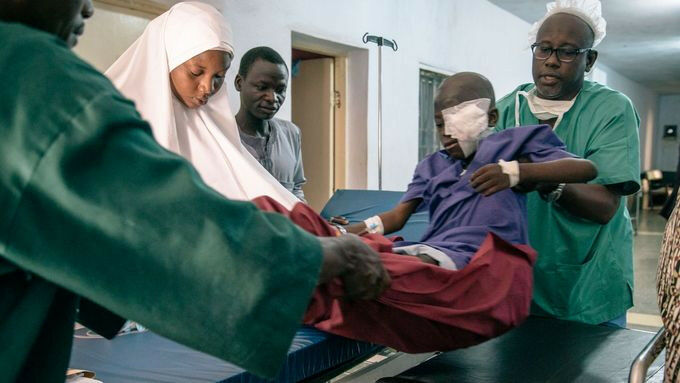
A 9-year-old noma survivor from Kano State, right after his second stage surgery at the Noma Hospital in Sokoto.
A 9-year-old noma survivor from Kano State, right after his second stage surgery at the Noma Hospital in Sokoto. There is very limited data on the incidence and prevalence of noma, which hinders better management and treatment of this devastating disease that mainly affects young and malnourished children in very poor communities. With a rigorous systematic literature review on the distribution of noma, Swiss TPH researchers contribute to a better understanding of the epidemiology of the disease and lay the groundwork for systematic control interventions. Noma ( cancrum oris ) is a severe disease originating in the mouth and destroying the face. It predominantly affects children aged 2 to 6 years living in extreme poverty in Africa, Asia and Latin America. The World Health Organisation (WHO) once estimated that 140,000 children are affected yearly by noma, with a prevalence of 770,000 survivors worldwide. The disease leads to the decay of the skin, muscles and bones in the face.
TO READ THIS ARTICLE, CREATE YOUR ACCOUNT
And extend your reading, free of charge and with no commitment.