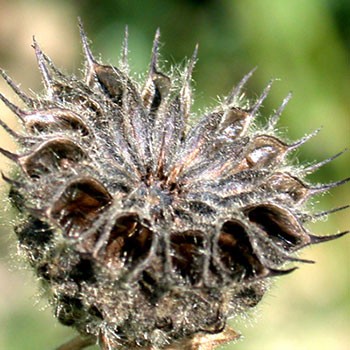
Velvetleaf, shown here, is a serious crop pest causing millions of dollars in damage annually in North America.
In the race to adapt to climate change, weeds may be the winners. Understanding their well-honed coping mechanisms could inform strategies for ecological management, says a Cornell crop and soil researcher. While other species are expected to suffer from environmental fluctuations, changes in temperature may help invasive weeds expand their ranges. Many weeds are capable of relatively rapid genetic change as well, further enhancing their ability to colonize new areas. The findings stem from the study, "Predicting Weed Invasion in Canada Under Climate Change: Evaluating Evolutionary Potential," published in the Canadian Journal of Plant Science (92:2012) by weed ecologist Antonio DiTommaso, associate professor of crop and soil sciences and the Richard C. Call, Director of Agricultural Sciences, and biologist David Clements of Trinity Western University. "The standard modeling approach treats plants like static entities," DiTommaso said. "But changes in weed distributions may also reflect evolutionary change in the plants themselves.
TO READ THIS ARTICLE, CREATE YOUR ACCOUNT
And extend your reading, free of charge and with no commitment.