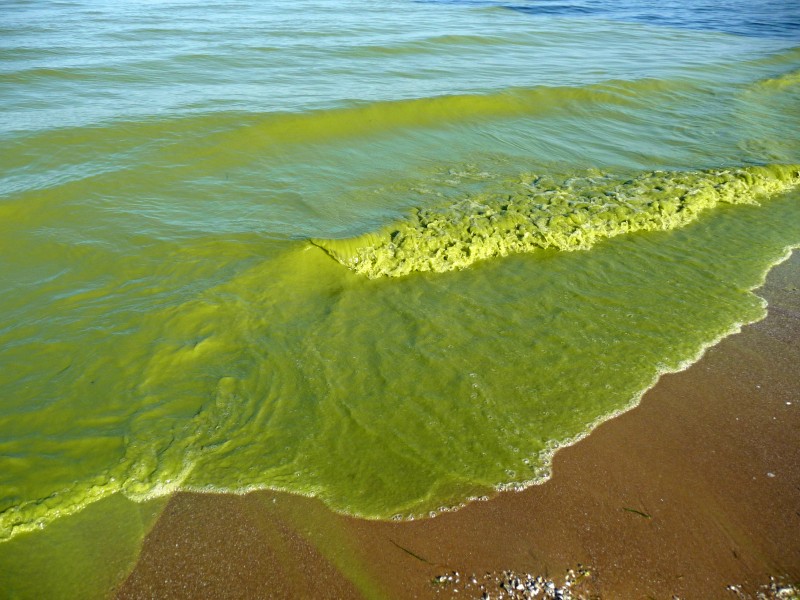
A Lake Erie algae bloom in September 2009. This photo was taken on the southeast shore of Pelee Island, Ontario. Image credit: Tom Archer
ANN ARBOR-Lake Erie has become increasingly susceptible to large blooms of toxin-producing cyanobacteria since 2002, potentially complicating efforts to rein in the problem in the wake of this year's Toledo drinking water crisis, according to a new study led by University of Michigan researchers. Since the detection of the toxin microcystin left nearly half a million Ohio and Michigan residents without drinking water for several days in early August, discussions of ways to prevent a recurrence have largely focused on the need to reduce the amount of phosphorus fertilizer that washes off croplands and flows into western Lake Erie to trigger harmful cyanobacteria blooms. In a study published online Oct. 8 in the journal Water Resources Research, scientists from U-M and the National Oceanic and Atmospheric Administration conclude that microcystin-producing cyanobacteria in Lake Erie are becoming more sensitive to phosphorus and that reductions may have to cut far deeper than recently proposed targets. "Our results suggest that current phosphorus loading targets will be insufficient for reducing the intensity of cyanobacteria blooms to desired levels, so long as the lake remains in a heightened state of bloom susceptibility," said lead author Daniel Obenour of the U-M Water Center. Other authors are Don Scavia of U-M and Andrew Gronewold and Craig Stow of the National Oceanic and Atmospheric Administration. The paper is a technical analysis of the uncertainties involved in computer modeling studies that use the amount of phosphorus entering Lake Erie in the spring to predict the size of late-summer cyanobacteria blooms, which have grown larger since the mid-1990s.
TO READ THIS ARTICLE, CREATE YOUR ACCOUNT
And extend your reading, free of charge and with no commitment.