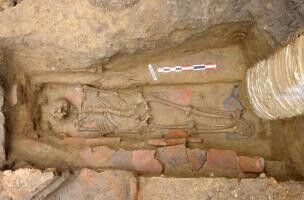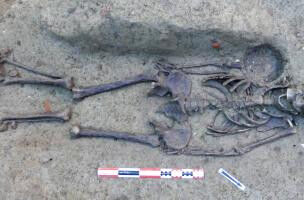
Fourteen graves from the 3rd to 6th centuries
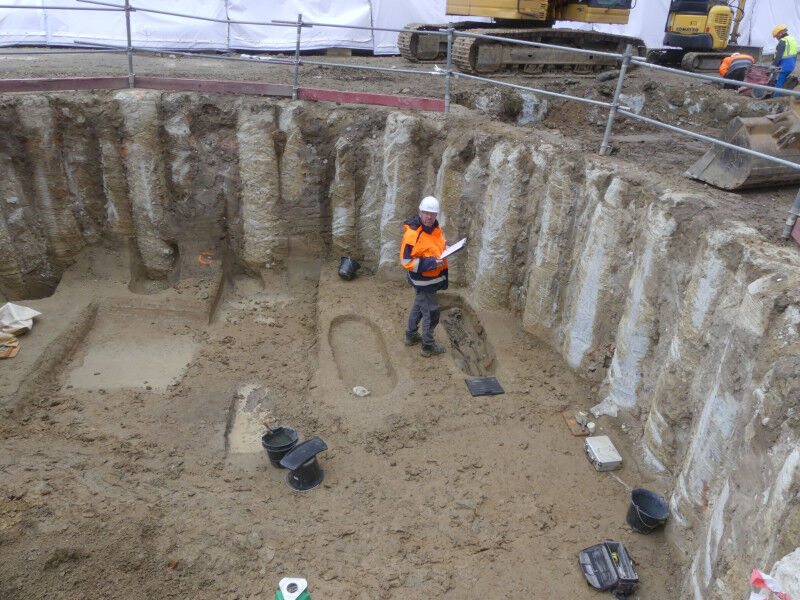
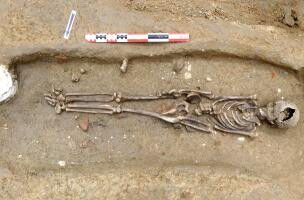
The archaeologists worked in an area outside the Roman ramparts, known from several previous operations that suggested the presence of the remains of a late Roman necropolis. Unearthed at a depth of 2.5 m during excavation, the ancient level did indeed yield a large number of burial structures, with 14 burial tombs discovered within the right-of-way. Although no evidence of a necropolis was found, the pits, up to 2 m long and 75 cm wide, were organized along two north-south axes. The tombs were made up of wooden planks held together by a few nails (more or less numerous depending on the coffin) and wedged together with fragments of brick or tegulae.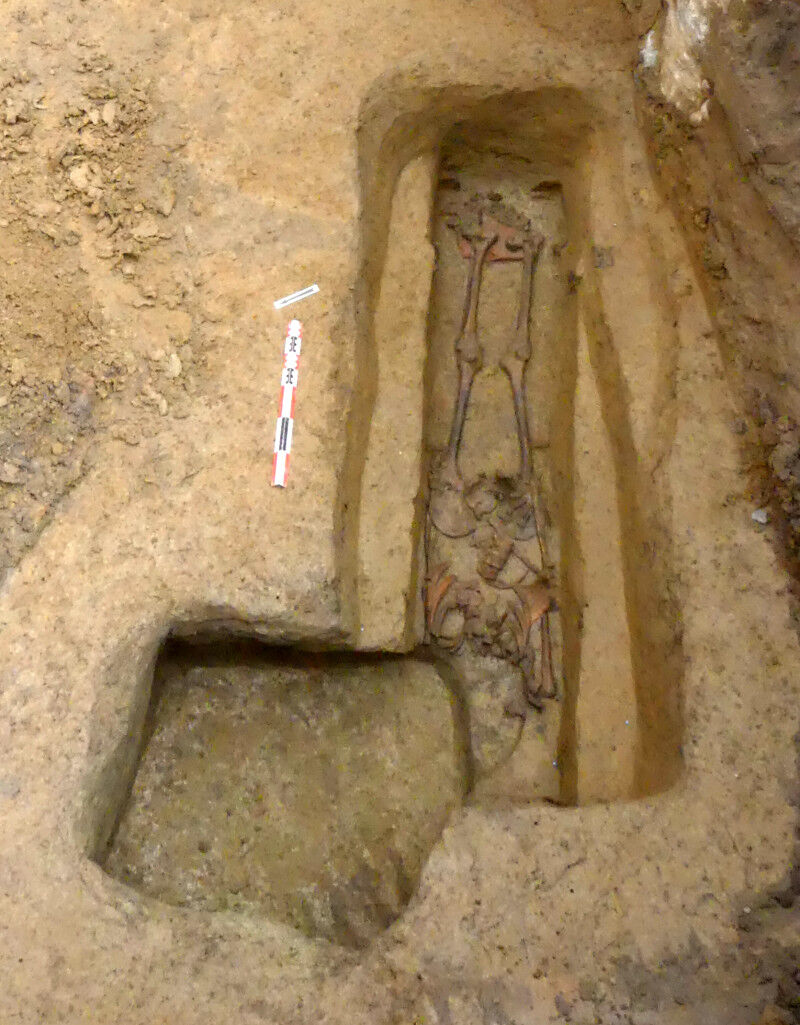
it should be noted that one of the tombs was the victim of looting: a pit was dug to reach the skull of a deceased person and remove it. The discovery of a "double hook" staple in the backfill of the excavation may date the gesture to the late 6th century at the earliest, but the ceramics collected will perhaps enable us to establish a better chronology.
An exceptional oven from the 1st century AD
The second sector of the excavation yielded a discovery as unexpected as it was exceptional. In a layer older than the tombs - the excavation of a burial site during Late Antiquity destroyed part of the firing chamber - Inrap archaeologists uncovered a kiln, designed for firing ceramics.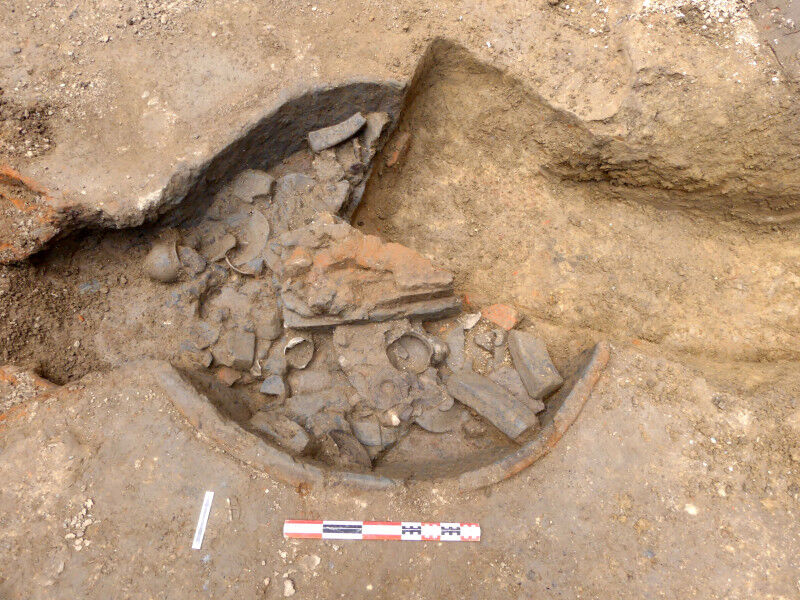
With an internal diameter of 1.35 m, it is of Gallic construction. As the kiln collapsed during the firing of a load, numerous ceramics, often complete, were found in the laboratory and in the working pit. An initial study of the furnishings indicates that they date from the 1st century AD, making this the oldest ancient kiln discovered in Toulouse.
Uncovering the ancient Rue Riquet
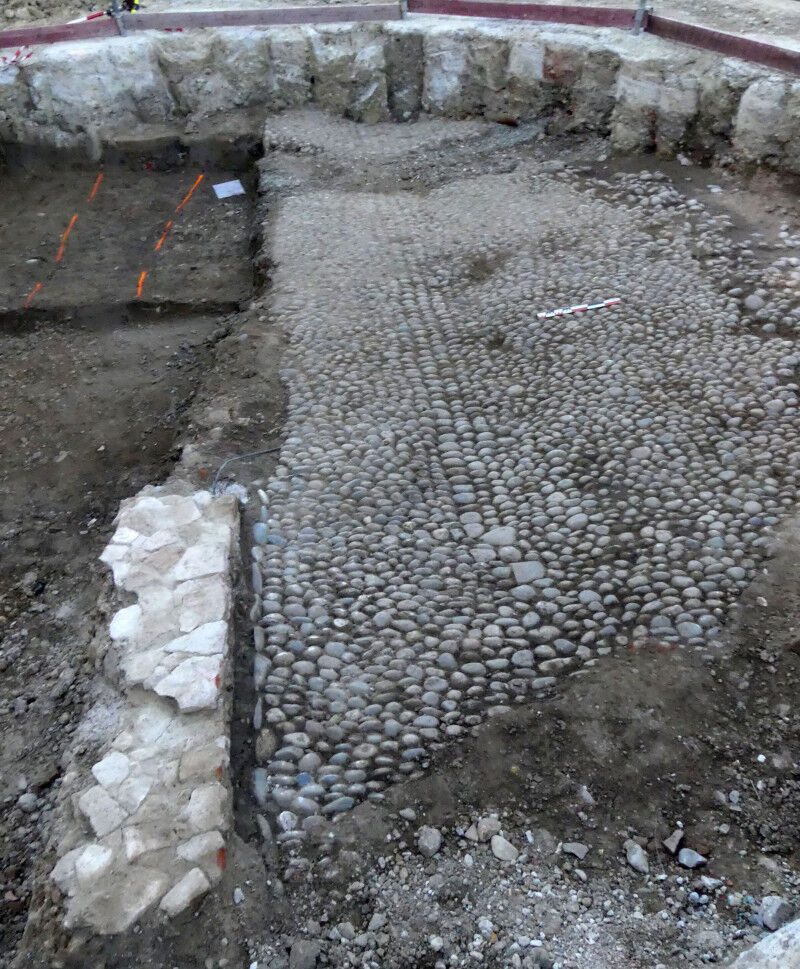
In the layers above the ancient level, at a depth of 80 cm, the most recent remains uncovered were those of a street. It was bordered by a wall that was completely bare at the time of excavation, and regularly relayed by pillars whose foundation bases were revealed.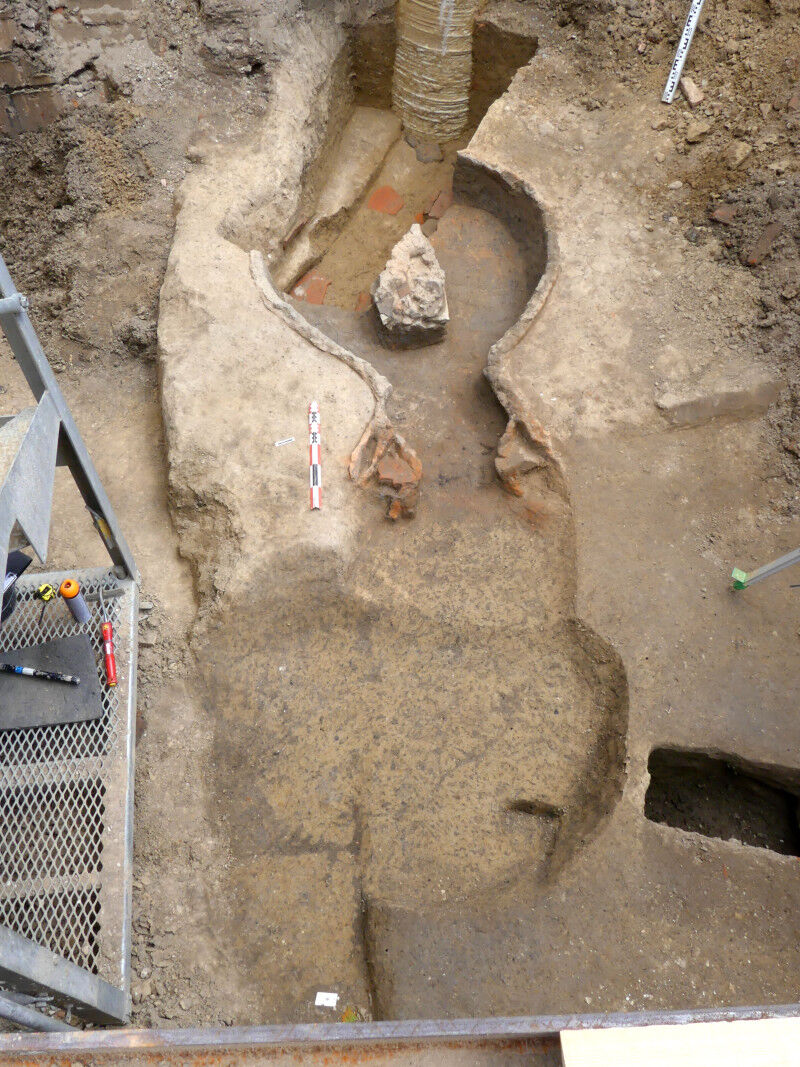
Scientific supervision: Service régional de l’archéologie (Drac Occitanie)
Scientific manager: Didier Paya, Inrap