

Health - Mar 30
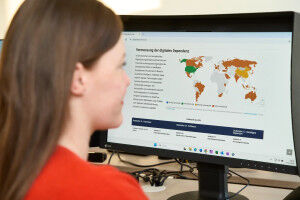
Minister Rianne Letschert visits Twente: education and science as drivers of the hospital of the future
Minister Rianne Letschert visits Twente: education and science as drivers of the hospital of the future

Social Sciences - Mar 30
New Research Project on African American Thought and the German Colonial Imagination
New Research Project on African American Thought and the German Colonial Imagination
Politics - Mar 30
Researcher Carolina Moreno calls for official science communication to counter disinformation in critical periods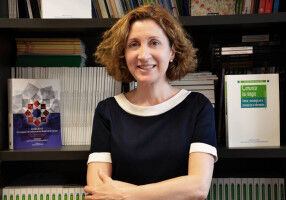
Researcher Carolina Moreno calls for official science communication to counter disinformation in critical periods

Health - Mar 30
Simple screening blood test could help identify undiagnosed heart failure in people living with diabetes
Simple screening blood test could help identify undiagnosed heart failure in people living with diabetes
Economics - Mar 30
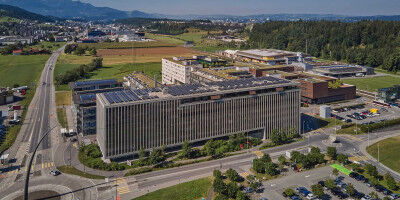
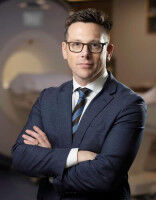
University of Glasgow and Lloyds Banking Group announce groundbreaking agentic AI research programme
University of Glasgow and Lloyds Banking Group announce groundbreaking agentic AI research programme
Astronomy & Space - Mar 30
ANU lends its expertise in laser communications to support NASA's Artemis II crewed moon mission
ANU lends its expertise in laser communications to support NASA's Artemis II crewed moon mission

Life Sciences - Mar 27
Understanding the Brain - TU Ilmenau's EU EMBRACE Project Nominated for European Excellence Award
Understanding the Brain - TU Ilmenau's EU EMBRACE Project Nominated for European Excellence Award
Social Sciences - Mar 27
A manual addresses, for the first time in Spain, child and adolescent sexual exploitation
A manual addresses, for the first time in Spain, child and adolescent sexual exploitation

science wire
Life Sciences
Results 16451 - 16500 of 17017.
Event - Life Sciences - 09.06.2010

Life Sciences - 09.06.2010
Individual brain cells can ID both cars and cats
CAMBRIDGE, Mass. Researchers at MIT's Picower Institute for Learning and Memory found that single brain cells, if confronted with a difficult task, can identify objects as dissimilar as sports cars and dogs.
Life Sciences - Health - 09.06.2010
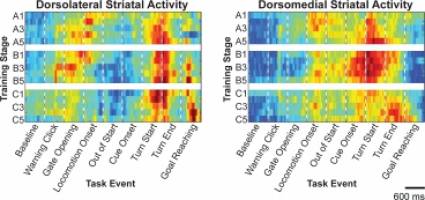
Rats exhibit different patterns of neural activity in the dorsolateral and dorsomedial parts of the striatum while learning to navigate a maze. Dorsolateral striatal neurons are most active (red) when the rat performs specific actions like starting, turning, and stopping. Dorsomedial striatal neurons are most active when the rat is deciding which way to turn, but this activity declines over time as the rat masters the task.
Life Sciences - 09.06.2010
Individual brain cells can ID both cars and cats
High oxygen production in thin-film materials could lead to greatly increased power production for fuel cells CAMBRIDGE, Mass.
Life Sciences - Health - 09.06.2010
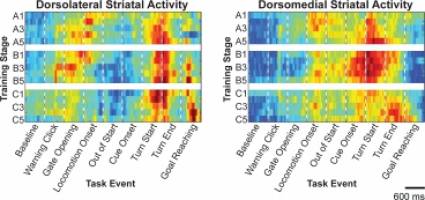
CAMBRIDGE, Mass. Driving to and from work is a habit for most commuters ? we do it without really thinking. But before our commutes became routine, we had to learn our way through trial-and-error exploration. A new study out of MIT has found that there are two brain circuits involved with this kind of learning and that the patterns of activity in these circuits evolve as our behaviors become more habitual.
Life Sciences - 09.06.2010
Royal Society recognition for two outstanding scientists
Chemistry - Life Sciences - 09.06.2010
Royal Society award winners
Health - Life Sciences - 08.06.2010
World first for veterinary science designed at UCL
UCL's expertise in biomedical engineering has underpinned a world first in veterinary science that may have major implications for human medicine.
Environment - Life Sciences - 08.06.2010
Peat bog restoration methods may harm insect species
Peat bogs are important as they provide a carbon sink and so aid the capture of CO2. Many bogs in north-western Europe have become dried out through overuse and extraction of peat. The most common way to restore and conserve these vital eco-systems has been to build a dam to raise the water level on a large scale.
Event - Life Sciences - 08.06.2010
2010 Cuthbertson, Dinkelspiel, Gores awards honor faculty, students and staff
Environment - Life Sciences - 08.06.2010

Thousands of school children will be helping Cambridge researchers this summer by taking part in the biggest ever survey of UK ladybirds.
Health - Life Sciences - 07.06.2010
Research led by the University of Leeds has found drugs such as anti-diabetic drug Metformin and AICAR, used to combat obesity, can prevent the hepatitis C virus from replicating in the body.
Life Sciences - Mathematics - 07.06.2010
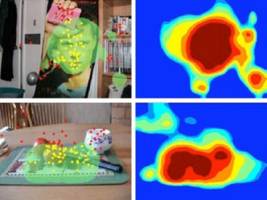
A new computational model of how the primate brain recognizes objects creates a map of 'interesting' features (right) for a given image. The model's predictions of which parts of the image will attract a viewer's attention (green clouds, left) accord well with experimental data (yellow and red dots).
Health - Life Sciences - 07.06.2010
Sharron Davies opens new respiratory research clinic
PA 130/10 Olympic swimmer and television personality Sharron Davies MBE will be in Nottingham later this week to open a new clinical trials unit that will take treatments for respiratory illnesses such as asthma from laboratory bench to bedside.
Life Sciences - Mathematics - 07.06.2010
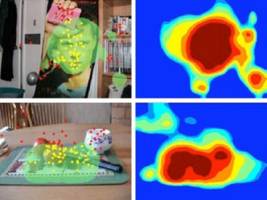
CAMBRIDGE, Mass. Researchers at MIT's McGovern Institute for Brain Research have developed a new mathematical model to describe how the human brain visually identifies objects. The model accurately predicts human performance on certain visual-perception tasks, which suggests that it's a good indication of what actually happens in the brain, and it could also help improve computer object-recognition systems.
Life Sciences - Health - 06.06.2010
The genetic secrets that allow Tibetans to thrive in thin air
The online edition of Proceedings of the National Academy of Sciences today reports on the work of an international team involving UCL's Professor Hugh Montgomery that has identified a gene that allows Tibetans to live and work more than two miles above sea level without getting altitude sickness. A previous study published 13 May 2010 in Science reported that Tibetans are genetically adapted to high altitude.
Life Sciences - Environment - 04.06.2010
The Intriguing World of Seaweeds
Recently, the characterization of brown seaweeds has taken a giant step forward with the decoding of the complete genome of one of these organisms ( Ectocarpus siliculosus ) by an international consortium led by Dr. Mark Cock from the Biological Station Roscoff (Bretagne, France).
Life Sciences - Environment - 04.06.2010
The Intriguing World of Seaweeds
Recently, the characterization of brown seaweeds has taken a giant step forward with the decoding of the complete genome of one of these organisms ( Ectocarpus siliculosus ) by an international consortium led by Dr. Mark Cock from the Biological Station Roscoff (Bretagne, France).
Life Sciences - Event - 03.06.2010

Life Sciences - Environment - 02.06.2010

Stanford's Department of Sustainability and Energy Management is urging researchers to go green and get rid of their old ultra-low-temperature freezers.
Administration - Life Sciences - 01.06.2010

Life Sciences - Health - 01.06.2010
Microbubble pioneers win £25,000 prize
Life Sciences - Chemistry - 01.06.2010
Chemists design new way to fluorescently label proteins
MIT researchers have designed a fluorescent probe that can be targeted to different locations within a cell.
Life Sciences - Chemistry - 01.06.2010
Chemists design new way to fluorescently label proteins
CAMBRIDGE, Mass. Since the 1990s, a green fluorescent protein known simply as GFP has revolutionized cell biology.
Health - Life Sciences - 28.05.2010
BHF grant renewed for thrombosis research
Alastair Poole, Professor of Pharmacology and Cell Biology in the Department of Physiology and Pharmacology, has been awarded a renewal of a programme grant from the British Heart Foundation.
Life Sciences - Health - 27.05.2010
Topping out ceremony for new institute researching disease causes
A topping out ceremony to mark the completion of the main construction stage of a new institute at the Sir William Dunn School of Pathology was carried out by the Vice-Chancellor of Oxford University today. The £30 million Oxford Molecular Pathology Institute (OMPI) has been designed jointly by Nightingale Associates and Make Architects.
Health - Life Sciences - 26.05.2010
Genetic information to improve lung cancer risk model
Liverpool, UK - 27 May 2010: Researchers at the University of Liverpool have further improved a risk model that calculates a patient¿s chance of developing lung cancer, with the inclusion of genetic markers that predispose people to the disease.
Health - Life Sciences - 26.05.2010
Sanofi-aventis establishes strategic alliance with MIT’s Center for Biomedical Innovation
CAMBRIDGE, Mass. Sanofi-aventis announced today a strategic alliance agreement with the Massachusetts Institute of Technology Center for Biomedical Innovation, which will be known as the sanofi-aventis Biomedical Innovation Program (SABIP).
Life Sciences - Administration - 25.05.2010
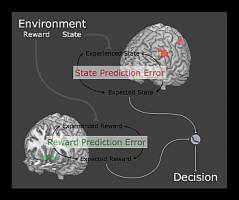
PASADENA, Calif.—The process of learning requires the sophisticated ability to constantly update our expectations of future rewards so we may make accurate predictions about those rewards in the face of a changing environment.
Event - Life Sciences - 25.05.2010
Student volunteers scoop award for school project
Life Sciences - Health - 25.05.2010
Efforts to understand the effects of ageing on the brain have been given a major boost with the announcement of a new £5M grant from the Biotechnology and Biological Sciences Research Council (BBSRC) to Cambridge researchers. The funding has been awarded to a team from public health, clinical neurosciences and psychology at the University of Cambridge and scientists from the MRC Cognition and Brain Sciences Unit who aim to understand how brain ageing in healthy people affects abilities like language and memory.
Life Sciences - Health - 25.05.2010
UCL study reveals more about our Achilles heel
It's a discovery that seems counter-intuitive but researchers from UCL and Liverpool University have found that tendons in high-stress and strain areas, like the Achilles tendon, actually repair themselves less frequently than low-stress tendons. The study, led by Dr Helen Birch (UCL Centre for Stem Cells and Regenerative Medicine) and published in this week's Journal of Biological Chemistry sheds some light on the increased susceptibility of certain tendons to injury during ageing.
Physics - Life Sciences - 25.05.2010
Nine undergraduates receive Deans’ Award for Academic Accomplishment
Nine undergraduates recently received the 2010 Deans' Award for Academic Accomplishment , which honors students for exceptional, tangible accomplishments in independent research, national academic co
Environment - Life Sciences - 24.05.2010
The Star of Africa’s Savanna Ecosystems May Be the Lowly Termite
Cambridge, Mass. May 25, 2010 - The majestic animals most closely associated with the African savanna - fierce lions, massive elephants, towering giraffes - may be relatively minor players when it comes to shaping the ecosystem. The real king of the savanna appears to be the termite, say ecologists who've found that these humble creatures contribute mightily to grassland productivity in central Kenya via a network of uniformly distributed colonies.
Earth Sciences - Life Sciences - 24.05.2010
Caltech-Led Team First to Directly Measure Body Temperatures of Extinct Vertebrates
PASADENA, Calif.— Was Tyrannosaurus rex cold-blooded? Did birds regulate their body temperatures before or after they began to grow feathers? Why would evolution favor warm-bloodedness when it has such a high energy cost? Questions like these—about when, why, and how vertebrates stopped relying on external factors to regulate their body temperatures and began heating themselves internally—have long intrigued scientists.
Environment - Life Sciences - 23.05.2010
If you go down to the woods in June...
Life Sciences - Economics - 23.05.2010
Enrollment in summer school projected to be the highest ever
Mathematics - Life Sciences - 21.05.2010
New Royal Society Fellows for 2010
Four researchers from the University of Oxford have been elected as new Fellows of the Royal Society. The new Fellows are Professor Philip Candelas, Professor Georg Gottlob, Professor Robert C Griffiths and Professor Ian Hickson. Professor Philip Candelas is Rouse-Ball Professor of Mathematics at the Mathematical Institute, and a Fellow of Wadham College.
Health - Life Sciences - 21.05.2010
Developing a better way to detect food allergies
Stanford team wins $200,000 MIT Clean Energy Prize with revolutionary electrode design to improve solar panel performance CAMBRIDGE, Mass.
Life Sciences - Physics - 20.05.2010
Health - Life Sciences - 20.05.2010
UM Receives Fifth Consecutive Howard Hughes Medical Institute Grant for Science Education
Life Sciences - Administration - 20.05.2010
Princeton awarded $1.5 million for biology education
Health - Life Sciences - 20.05.2010
Grove gift launches translational medicine program at UCSF, UC Berkeley
Life Sciences - Chemistry - 19.05.2010

PASADENA, Calif.—Biologists from the California Institute of Technology (Caltech) and Yale University have identified two genes, the leucokinin neuropeptide and the leucokinin receptor, that appear to regulate meal sizes and frequency in fruit flies. Both genes have mammalian counterparts that seem to play a similar role in food intake, indicating that the steps that control meal size and meal frequency are not just behaviorally similar but are controlled by the same genes throughout the animal kingdom.
Health - Life Sciences - 18.05.2010
Suppressing Activity of Common Intestinal Bacteria Reduces Tumor Growth
Mouse studies promising to colon cancer patients who currently have surgery as only option May 10, 2010 By Scott LaFee A team of University of California, San Diego School of Medicine researchers has
Health - Life Sciences - 18.05.2010
Gammaglobulin Treatment May Slow Alzheimer’s Disease
UC San Diego Health System Seeking Participants for Nationwide Clinical Trial May 10, 2010 By Debra Kain Researchers at the University of California, San Diego Alzheimer's program have begun a Phase III clinical trial testing a new approach to slowing down the progression of Alzheimer's disease using Intravenous Immune Globulin (IVIg), also known as gammaglobulin.
Life Sciences - Chemistry - 17.05.2010
In video interviews, Imperial scientists explain how the state-of-the-art technology will help their research - News By Lucy Goodchild Tuesday 18 May 2010 A new laser laboratory that will help scientists see how proteins become activated at a molecular level launched at Imperial College London on 29 April 2010.
Environment - Life Sciences - 17.05.2010
IYB at UCL: Investigating Spain’s ecology
Physics - Life Sciences - 17.05.2010

Life Sciences - Environment - 14.05.2010
IYBD at UCL: Exploring Lake Tanganyika


Health - Mar 30
Minister Rianne Letschert visits Twente: education and science as drivers of the hospital of the future
Minister Rianne Letschert visits Twente: education and science as drivers of the hospital of the future
Social Sciences - Mar 30
New Research Project on African American Thought and the German Colonial Imagination
New Research Project on African American Thought and the German Colonial Imagination
Politics - Mar 30
Researcher Carolina Moreno calls for official science communication to counter disinformation in critical periods
Researcher Carolina Moreno calls for official science communication to counter disinformation in critical periods
Health - Mar 30
Simple screening blood test could help identify undiagnosed heart failure in people living with diabetes
Simple screening blood test could help identify undiagnosed heart failure in people living with diabetes
Economics - Mar 30
University of Glasgow and Lloyds Banking Group announce groundbreaking agentic AI research programme
University of Glasgow and Lloyds Banking Group announce groundbreaking agentic AI research programme
Astronomy & Space - Mar 30
ANU lends its expertise in laser communications to support NASA's Artemis II crewed moon mission
ANU lends its expertise in laser communications to support NASA's Artemis II crewed moon mission
Life Sciences - Mar 27
Understanding the Brain - TU Ilmenau's EU EMBRACE Project Nominated for European Excellence Award
Understanding the Brain - TU Ilmenau's EU EMBRACE Project Nominated for European Excellence Award
Social Sciences - Mar 27
A manual addresses, for the first time in Spain, child and adolescent sexual exploitation
A manual addresses, for the first time in Spain, child and adolescent sexual exploitation