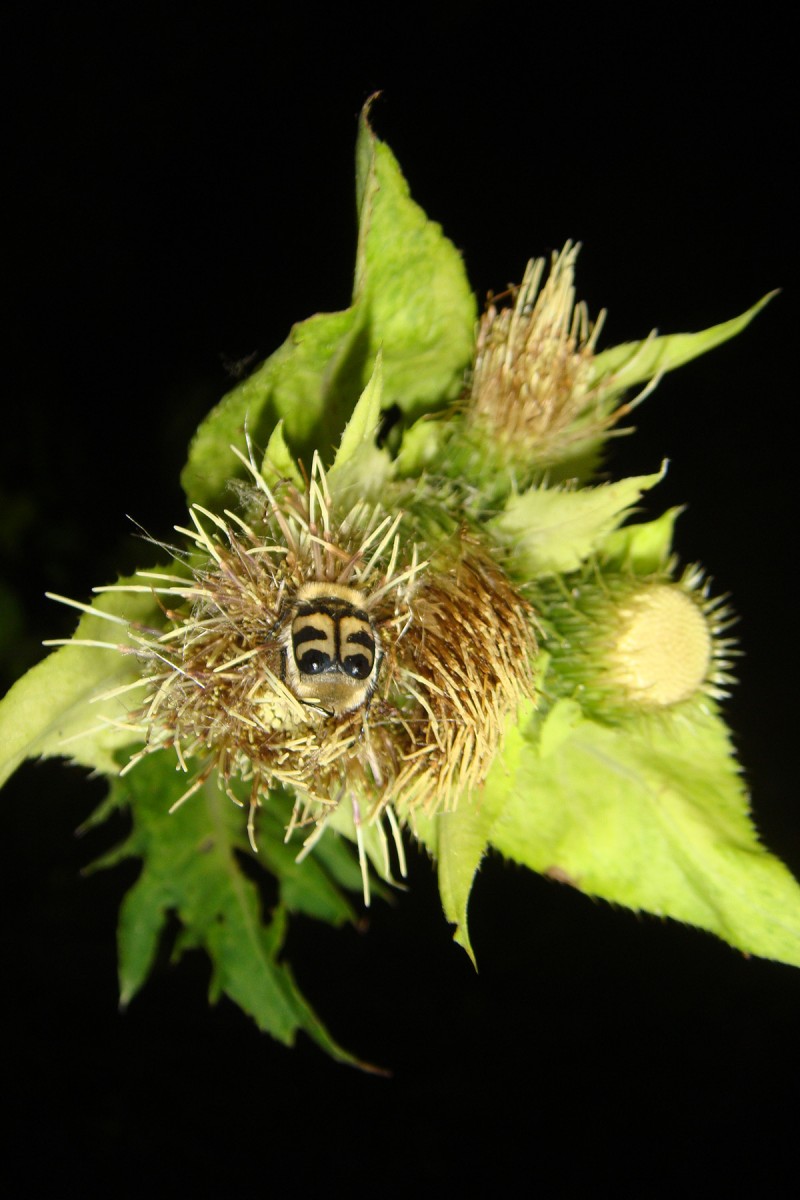
 Nocturnal flower visitor on thistle: Beetle actively moving on the cabbage thistle (Cirsium oleraceum) during night. Nocturnal pollination of the cabbage thistle was disrupted by artificial light at night, leading to a reduced fruit set.
Media releases, information for representatives of the media Media Relations (E) Artificial light disrupts nocturnal pollination and leads to a reduced number of fruits produced by the plant. This loss of night time pollination cannot be compensated by diurnal pollinators. The negative impact of artificial light at night on nocturnal pollinators might even propagate further to the diurnal community, as ecologists of the University of Bern were able to show. The number of bees and other diurnal pollinators is declining worldwide - due to diseases, introduced parasites, pesticides, climate change and the continuing loss of habitats. Now, Eva Knop's team from the Institute of Ecology and Evolution at the University of Bern, shows for the first time, that nocturnal pollinators can be affected by artificial light leading to a disruption of the pollination service they provide. "So far, nocturnal pollinators have been largely neglected in the discussion of the worldwide known pollinator crisis", says Knop. However, there are numerous nocturnal pollinators, and they play an important role for plants, as the study in the Bernese Prealps shows.
TO READ THIS ARTICLE, CREATE YOUR ACCOUNT
And extend your reading, free of charge and with no commitment.
Your Benefits
- Access to all content
- Receive newsmails for news and jobs
- Post ads