Modern conflict archaeology is the most democratic kind of archaeology - one which takes a bottom-up approach - in order to understand the web of emotional, military, political, economic and cultural experiences and legacies of conflict.
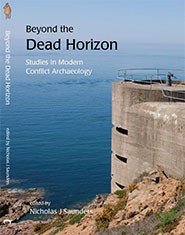
Modern conflict archaeology is the subject of a new book written by postgraduates from the University of Bristol's Department of Archaeology and Anthropology and edited by Nicholas Saunders. Beyond the Dead Horizon: Studies in Modern Conflict Archaeology comprises 18 papers which represent a new response to the complexities of studying wars within living memory. The new cross-disciplinary study of modern conflict archaeology has developed rapidly over the last decade. It takes an anthropological approach to modern conflicts, their material culture and legacies, offering powerful new insights into the nature and experience of industrialised war - whether between nation states or as civil conflict, by individuals as well as groups and by women and children, as well as men of fighting age. Saunders said: "Modern conflict archaeology is the most democratic kind of archaeology - one which takes a bottom-up approach - in order to understand the web of emotional, military, political, economic and cultural experiences and legacies of conflict. "The 18 papers collected in this book offer an intellectual home for those not interested in traditional 'war studies' or military history, but who respond to the idea of a multidisciplinary approach to all modern conflict." Beyond the Dead Horizon: Studies in Modern Conflict Archaeology edited by Nicholas J. Saunders is published by Oxbow Books, £38. On Saturday 20 October, the Fourth Annual Conference on Modern Conflict Archaeology takes place in the Department of Archaeology and Anthropology, 43 Woodland Road.
TO READ THIS ARTICLE, CREATE YOUR ACCOUNT
And extend your reading, free of charge and with no commitment.