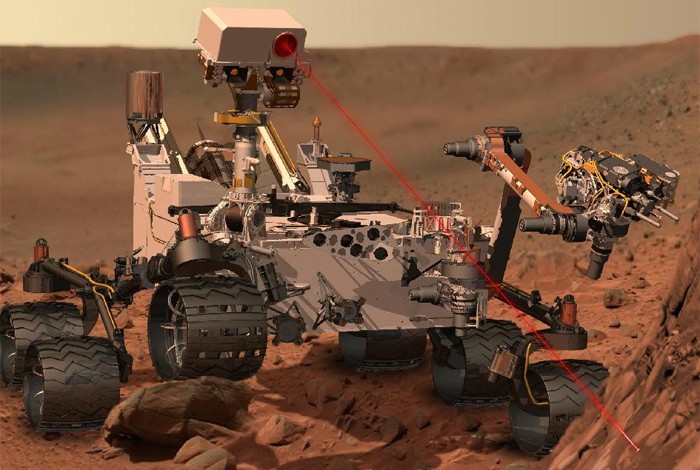
Curiosity zaps Mars for vital signs: ChemCam, designed by Lab team, looks for elements such as carbon, nitrogen, and oxygen, all of which are crucial for life.
The ChemCam laser characterization instrument was developed at LANL and the French space institute, IRAP. LANL ChemCam to be tested soon and will begin probing Mars mysteries LOS ALAMOS, New Mexico, August 6, 2012—Los Alamos National Laboratory scientists are elated by Sunday's successful landing of NASA's Curiosity rover on Mars, and are ready to begin a nearly two-year-long mission that will use a rock-zapping laser device mounted on the mast of the SUV-sized rover to help unravel mysteries of the Red Planet. The ChemCam laser characterization instrument was developed at LANL and the French space institute, IRAP. "I can't describe the feeling when we realized that Curiosity had landed safely on the planet,” said LANL planetary scientist Roger Wiens, principal investigator of the Mars Science Laboratory mission's ChemCam team. "My own curiosity about Mars began when I was a boy, and having an instrument that I've handled land on the Martian surface fulfills a lifelong dream that started long ago with a backyard telescope. This is an extremely happy, fulfilling moment. The ChemCam system is one of 10 instruments mounted on the MSL mission's Curiosity rover—a six-wheeled mobile laboratory that will roam more than 12 miles of the planet's surface during the course of one Martian year (98 Earth weeks).
TO READ THIS ARTICLE, CREATE YOUR ACCOUNT
And extend your reading, free of charge and with no commitment.