How can a disease that we thought had been eradicated come knocking on Europe’s door again, shifting from a historical memory into an imminent threat? What roles do climate change and global flows play in reshuffling the cards of an epidemiological balance that seemed consolidated? Dr Caroline Junqueira, researcher and director of the Immunobiology Laboratory at the Institute for Research in Biomedicine (IRB) in Bellinzona (affiliated with USI ), explores these issues in an article created in collaboration with laRegione.
Malaria, which has afflicted the Canton of Ticino for decades, must be carefully monitored. For nearly fifty years, Europe has largely been free of serious epidemics of infectious diseases. During this time, the world’s most debilitating and fatal infectious diseases were concentrated in tropical and lowand middle-income countries. However, the global epidemiological landscape has changed over the last decade. The COVID-19 pandemic has sent a clear message about the world’s susceptibility to the emergence of new pathogens and the reappearance of previously eradicated diseases, especially in Europe.
Over the past two years, there has been considerable discussion about the emergence of new pathogens on the European continent, including viruses responsible for dengue, Zika, chikungunya, and West Nile; bacteria that cause Lyme disease; and the parasite that causes Chagas disease. Notably, all’of these diseases are transmitted by invertebrate vectors, such as insects and ticks. In addition to these new threats, there has also been a resurgence of other diseases that were previously eradicated from the continent but are now being transmitted by insects or arthropods. This is the case with leishmaniasis, now considered endemic in Italy, Spain, Portugal and Greece, and malaria, for which localised outbreaks of autochthonous transmission have been reported in the last ten years.
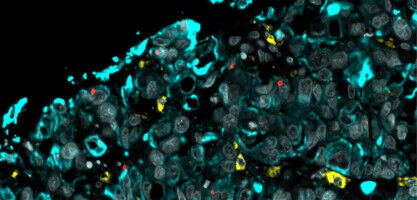
At the Institute for Research in Biomedicine (IRB) in Bellinzona, affiliated with Università della Svizzera italiana, several research groups are developing new tools to diagnose, treat or prevent many of the above-mentioned diseases. In particular, the Immunobiology Laboratory, led by Dr Caroline Junqueira, is studying how the immune system responds during malaria infection. Understanding these immunological mechanisms provides fundamental information for the development of new vaccines and immunotherapies against malaria.
What it is
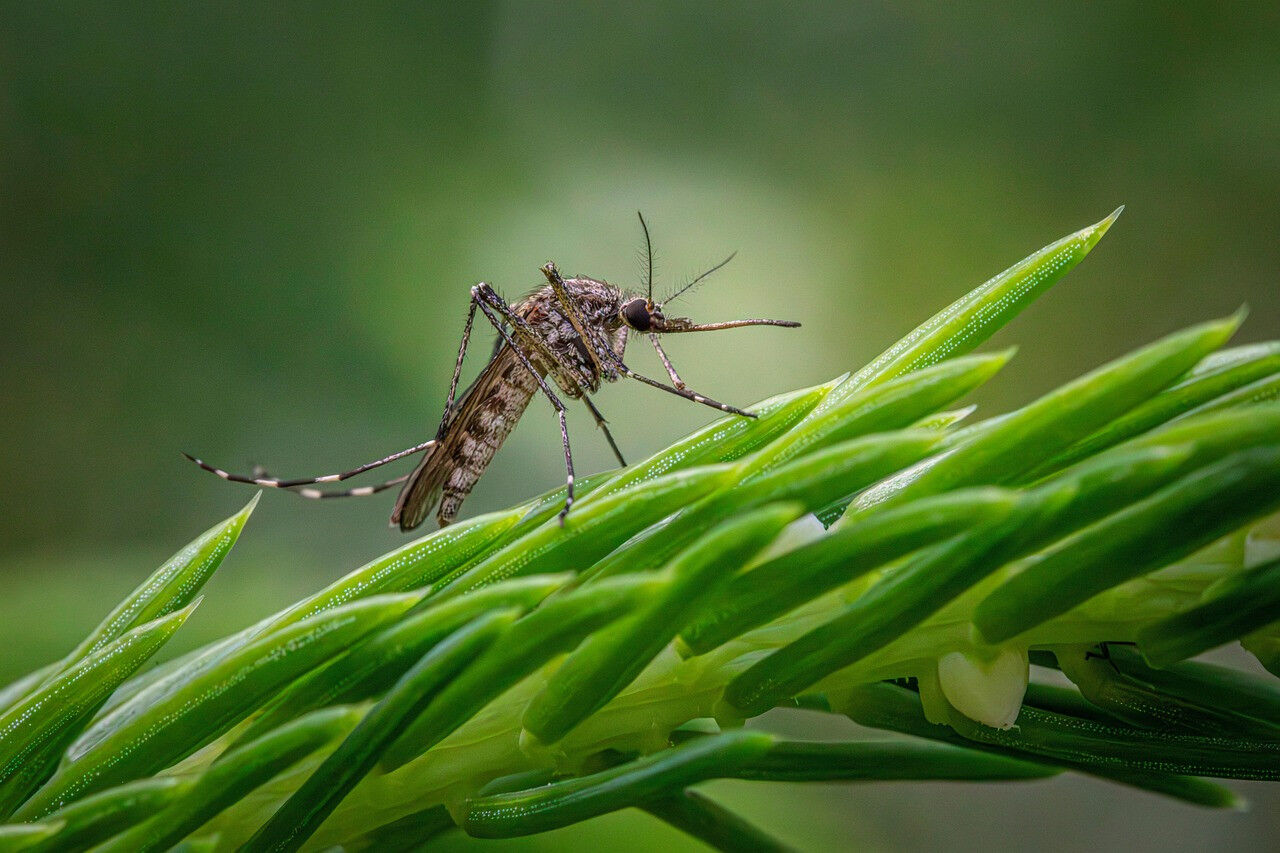
Malaria is a potentially fatal disease transmitted by mosquitoes, which poses a risk to about half of the world’s population. It is caused by parasites of the genus Plasmodium, transmitted to humans by the bites of mosquitoes of the genus Anopheles. Less frequently, Plasmodium can also be transmitted through blood products, posing a high risk for blood transfusions and organ transplants. Five species of Plasmodium can infect humans, but Plasmodium falciparum and Plasmodium vivax cause most human disease. Plasmodium falciparum is most common in Africa, while Plasmodium vivax is widespread, with higher frequencies in Asia, the Americas, the Middle East and the Western Pacific. In particular, several countries where Plasmodium falciparum infections were controlled or eliminated are now facing an increase in Plasmodium vivax cases.
Malaria symptoms can appear 7 to 30 days after infection and include flu-like symptoms such as chills, fever, muscle and joint pain, fatigue, headache, abdominal pain, vomiting and diarrhoea. A classic symptom of malaria is cyclical fever, which recurs every 48 to 72 hours. Although effective drugs exist to treat malaria, late diagnosis is the leading cause of death in non-endemic countries, resulting in severe anaemia and multiple organ failure. Therefore, anyone who develops these symptoms after travelling to endemic countries, or who suspects local transmission, is advised to seek medical attention immediately.
In Europe and Switzerland
Until a century ago, malaria was found on every continent except Antarctica. Many of the world’s wealthier countries managed to eradicate the disease through a combination of approaches, including the use of antimalarial drugs for prevention and mosquito control achieved through widespread insecticide application. However, half of the world’s population is still at risk of malaria. In particular, local transmission of malaria has been reported in recent years in Europe and the United States, countries where malaria was eradicated decades ago. As with other mosquito-borne illnesses, factors such as international travel, population movements, and global climate change-which encourage the reproduction and spread of Anopheles mosquito vectors-are contributing to new cases of malaria in areas that were once free of the disease. This situation underscores significant global health concerns. As a result, malaria, which was not deemed a threat to Europe for many years, is now considered an imminent danger.
Switzerland has played a key role in the global effort to eradicate malaria: from the development of DDT (insecticide) by Nobel Prize winner Paul Hermann Müller, to the development of antimalarial drugs by Swiss pharmaceutical companies and, more recently, with the essential contribution of Medicines for Malaria Venture (MMV), a Swiss initiative that promotes the development of antimalarial drugs and insecticides worldwide. DDT and domestically developed antimalarial drugs have been crucial tools in eliminating malaria endemicity in Switzerland, especially in the southern cantons, including Ticino, the most affected region. Despite the elimination of malaria in Switzerland, it is important to note that four species of Anopheles mosquitoes, susceptible to Plasmodium infection, remain widespread in the country. Given the global reorganisation of the disease, being prepared for potential epidemics is no longer a remote possibility.
Historically, the Canton of Ticino was an endemic area for malaria, with Plasmodium vivax as the most widespread species. Over the centuries, Ticino has been severely affected by historic flooding of the Ticino River, particularly in the wetlands of the Magadino Plain, which until the 1930s was an endemic malaria site. After widening and regulating the Ticino River on the Swiss side and constructing the Miorina dam on the Italian side to regulate Lake Maggiore, flooding has decreased significantly. However, due to climate change, storms and heavy rainfall are becoming more frequent, so vulnerability to flooding remains and the possible increase in insect-borne diseases poses a real risk.
The risk of an epidemic in Ticino
The increase in mosquitoes resistant to currently available insecticides, the emergence of Plasmodium strains resistant to antimalarial drugs and the lack of healthcare in endemic countries are contributing significantly to the resurgence of malaria cases worldwide. The Covid-19 pandemic has also had a substantial negative impact, reversing the incidence and mortality rates observed 10 years ago and drastically undermining the WHO’s goal of "eliminating malaria". As stated earlier, new waves of local transmission in "malaria-free" countries are becoming more common, as is the emergence of Plasmodium vivax in countries where Plasmodium falciparum elimination strategies have been implemented. Overall, the goal of "eliminating malaria" is becoming increasingly complex, and new tools for health surveillance, diagnosis, treatment and prevention should be developed.
Switzerland is currently regarded as a low-risk area for local disease transmission; however, rapid climatic and geographic changes necessitate increased vigilance. Given the global reshuffling of diseases, it is crucial to prepare for potential epidemics. In Ticino, where malaria-carrying mosquitoes are part of the local fauna, careful monitoring of mosquito populations and their potential to spread infections is essential. Additionally, it is important to implement diagnostic monitoring of blood banks for Plasmodium infections, as well as for new arrivals from malaria-endemic regions. Overall, the goal is to remain alert and prepared for any imminent emergencies.
Content produced by the Institute for Research in Biomedicine (IRB) in Bellinzona, affiliated with USI, on its 25th anniversary, in collaboration with laRegione .