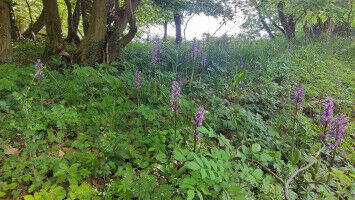
The managed fallows are marked in order to minimize visitors’ affluence. Photo: Josep M. Torres Payerol
The managed fallows are marked in order to minimize visitors' affluence. Photo: Josep M. Torres Payerol - Over the last forty years, the agricultural intensification, as well as the urban and farming development in the Lleida Plain, have reduced the expansion and quality of the available habitat for the steppe birds of this area, which covers a great part of species of such kind in Spain. The report on the State of Nature in Catalonia shows that this is one of the most threatened bird groups in the territory, with a decline of 27% in the populations in the 200-2019 period. However, over the last years, the Catalan Government has started several conservation actions that involved an important economic investment aiming to revert this situation. These actions included, among others, the declaration of eight Special Protection Areas for Birds (ZEPA), the rental or purchase and management of steppe and fallow areas, the adaptation of nesting areas, the launch of breeding programs to support some populations, and the signalling of power lines to reduce the risk of collision. Optimism for steppe birds in the Lleida Plain "The results of such actions leave room for optimism", notes Santi Mañosa, lecturer at the Faculty of Biology and member of the Biodiversity Research Institute of the UB ( IRBio ). "Although the current situation of many species is far from being optimal and conservation actions need measures, the current scenario is better than what it would be with a lack of any management measure.
TO READ THIS ARTICLE, CREATE YOUR ACCOUNT
And extend your reading, free of charge and with no commitment.