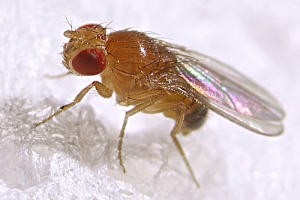
Drosophila
Over 350 scientists from around the world are gathering at The University of Manchester for 'Neurofly', the 13th conference on Drosophila neurobiology, which starts today and runs until 5 September. Drosophila is the tiny fruitfly which has been used for a century to unravel the secrets of how genes contribute to the formation and function of the brain and influence behaviour, in both health and disease. Conference co-organiser Professor Matthew Cobb, at Manchester's Faculty of Life Sciences, said: "Amazingly, many important discoveries in human behaviour were first revealed in Drosophila . For example, the genes that make our biological clocks "tick” were discovered in the fly and now help us understand "jet-lag” or sleeping disorders. "This surprising similarity between humans and flies is being explored in a number of presentations at Neurofly, many of which use the fly as a "test tube" for understanding aggression, learning or sleep, as well as neurological disorders. "From mental retardation to autism, from prion disease to spastic paraplegia, researchers will be showing how the fly is able to cast light on human genetic disorders and help chart the way to potential treatments. Professor Richard Baines, who also organised the conference along with Dr Andreas Prokop, added: "One of the highlights of the conference will be Professor David Lomas's talk on using flies to understand Alzheimer's disease.
TO READ THIS ARTICLE, CREATE YOUR ACCOUNT
And extend your reading, free of charge and with no commitment.