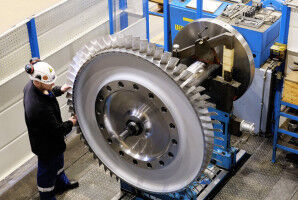
Key componants of the turbine engine
01 Dec 2011 The University of Manchester is leading a £2.7m research project to create a key component in reducing jet engine emissions. FLITES (Fibre-Laser Imaging of Gas Turbine Exhaust Species) aims to establish a world-leading capability to map several exhaust species from aeroplanes using tomographic imaging. Together with academic and commercial partners including the Universities of Southampton and Strathclyde , Rolls-Royce, Shell, Covesion, Fianium and OptoSci, Manchester academics will lead the four-year study focussing on carbon dioxide emissions and how they can be lowered. The Manchester researchers, based in the School of Electrical and Electronic Engineering , aim to produce the first-ever images of the distribution of chemical species in aero-engine exhaust plumes. They will use novel fibre lasers developed at the University of Southampton and new electronic architectures for spectroscopic measurement from the University of Strathclyde. FLITES will build upon the expertise of engineers at the University who have already used tomographic imaging to view fuel in automotive engine combustion chambers. The FLITES team has been awarded £1.8m by EPSRC , with the companies providing more than £500,000 in support.
TO READ THIS ARTICLE, CREATE YOUR ACCOUNT
And extend your reading, free of charge and with no commitment.