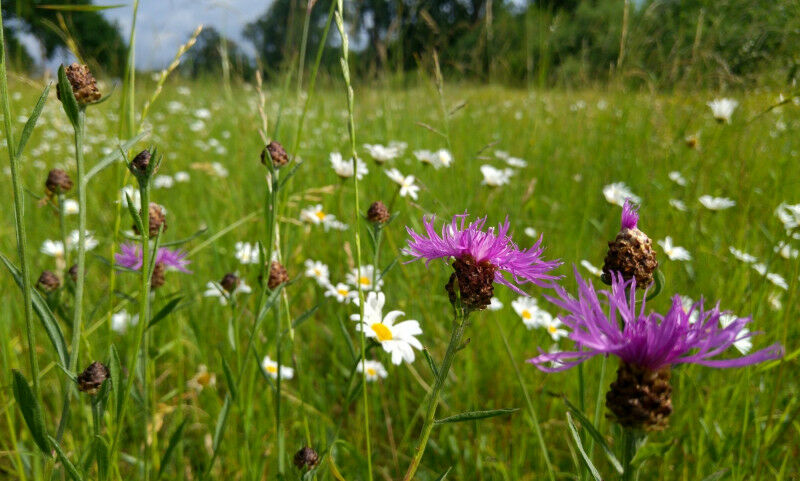
A study examines the acceptance of measures to enhance biodiversity in European cities [Picture: Valentin Klaus]
A study examines the acceptance of measures to enhance biodiversity in European cities [ Picture: Valentin Klaus] Greenspaces in our cities are increasingly left as meadows in order to enhance biodiversity. But time and again, residents complain that near-natural urban greenspaces appear "untidy" and limit leisure activities, or they fear ticks or allergies. A research team led by Prof. Leonie Fischer from the University of Stuttgart, Dr. Lena Neuenkamp from the University of Bern, and Dr. Valentin Klaus from the ETH Zurich has now conducted a Europe-wide study to examine what can be done to increase the acceptance of biodiversity-friendly maintenance measures. Increasing global urbanization on the one hand and species extinction on the other make it necessary to enhance biodiversity in cities as well. For this reason, parks, gardens, playgrounds, and cemeteries are often designed to provide an alternative to the dwindling natural habitats for wildlife and plants. However, local approaches that support nature in the city must be planned and managed in a way that the people in the city can understand and accept them. In order to find out what the population thinks about the nature-friendly maintenance of public greenspaces and how "nature in the city" can work, the research group interviewed more than 2,000 study participants in 19 European cities.
TO READ THIS ARTICLE, CREATE YOUR ACCOUNT
And extend your reading, free of charge and with no commitment.