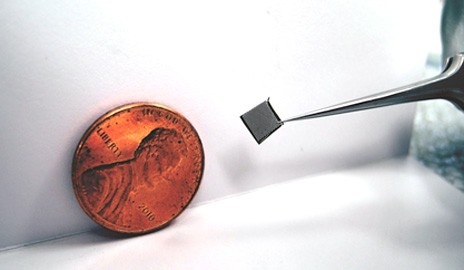
Yale engineers have demonstrated a micro fuel cell made of glass.
Engineers at Yale University have developed a new breed of micro fuel cell that could serve as a long-lasting, low-cost, and eco-friendly power source for portable electronic devices, such as tablet computers, smart phones, and remote sensors. The researchers describe their novel device in a paper published online in the journal Small. An alternative to a battery, a fuel cell is an electrochemical device that combines hydrogen and oxygen to produce energy, giving off only water and heat as byproducts. But the most common materials and methods for making micro fuel cells are fragile, inefficient, and expensive. Major components of the new device are made of bulk metallic glasses (BMGs) - extremely pliable metal alloys that nonetheless are more durable than the metals typically used in micro fuel cells. BMGs can be finely shaped and molded using a comparatively efficient and inexpensive fabrication process akin to processes used in shaping plastics. "These amorphous metal alloys are amazing materials that can be easily shaped into both large and small nanostructures, yet retain suitable properties for a wide range of electrochemical applications," said André D. Taylor, an assistant professor of chemical and environmental engineering at Yale School of Engineering & Applied Science and a principal investigator of the research.
TO READ THIS ARTICLE, CREATE YOUR ACCOUNT
And extend your reading, free of charge and with no commitment.