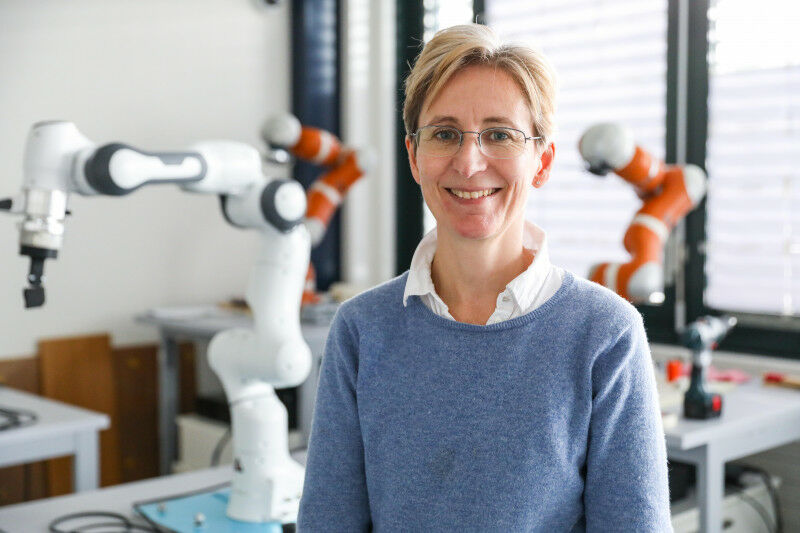
 Aude Billard, the head of EPFL’s Learning Algorithms and Systems Laboratory
Aude Billard, the head of EPFL's Learning Algorithms and Systems Laboratory © Alain Herzog 2021 EPFL Two EPFL research groups teamed up to develop a machine-learning program that can be connected to a human brain and used to command a robot. The program adjusts the robot's movements based on electrical signals from the brain. The hope is that with this invention, tetraplegic patients will be able to carry out more day-to-day activities on their own. Tetraplegic patients are prisoners of their own bodies, unable to speak or perform the slightest movement. Researchers have been working for years to develop systems that can help these patients carry out some tasks on their own. -People with a spinal cord injury often experience permanent neurological deficits and severe motor disabilities that prevent them from performing even the simplest tasks, such as grasping an object,- says Prof. Aude Billard, the head of EPFL's Learning Algorithms and Systems Laboratory. -Assistance from robots could help these people recover some of their lost dexterity, since the robot can execute tasks in their place.
TO READ THIS ARTICLE, CREATE YOUR ACCOUNT
And extend your reading, free of charge and with no commitment.
Your Benefits
- Access to all content
- Receive newsmails for news and jobs
- Post ads