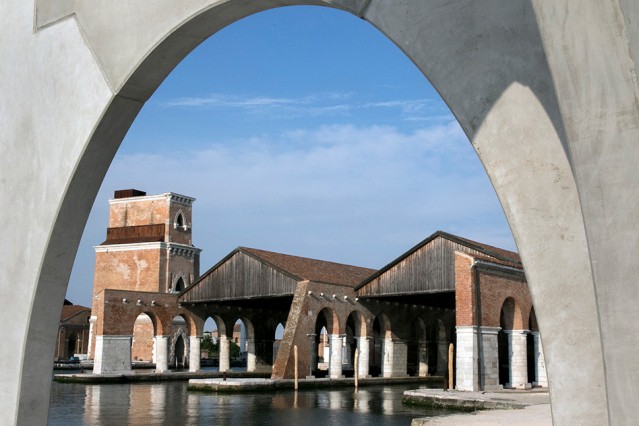
The Venice Architecture Biennale, held every two years at the sprawling Arsenale (above) and Giardini grounds on the city’s eastern tip, opens this weekend. This year’s focus on architecture’s ability to address global challenges -- including numerous installations and projects from MIT faculty, students, and alumni -- may indicate a paradigm shift for architecture, participants say.
At the 2016 Venice Architecture Biennale, opening Saturday, architects and designers have responded to a charge to "report from the front" on major challenges and issues facing humanity around the globe. In installations throughout Venice - from the historic venues of the Arsenale and Giardini on the island's eastern tip, to repurposed palazzos and churches across the city - MIT faculty, alumni, and students are among the contributors offering varied and potent responses. Their efforts, considered alongside numerous others displayed in scores of exhibitions and pavilions, may signal a paradigm shift for architecture, participants say. Considered one of the foremost global forums for architecture and the built environment, and drawing hundreds of thousands of visitors from around the world, the Architecture Biennale takes place every two years in Venice. The 2016 curator, Chilean architect and Pritzker Prize winner Alejandro Aravena, chose as his theme "reporting from the front," focusing on architecture's capacity to improve the human condition by addressing problems such as segregation, inequality, suburbia, sanitation, natural disasters, housing shortages, migration, crime, traffic, waste, pollution, and community participation. "If the current condition is that you deal with only projects that interest other architects, then let's [instead] try to start from projects that interest every single citizen," said Aravena.
TO READ THIS ARTICLE, CREATE YOUR ACCOUNT
And extend your reading, free of charge and with no commitment.