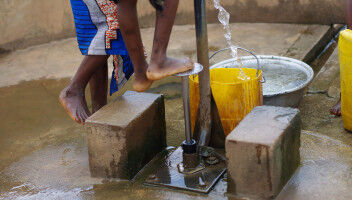
Following the devastating Cyclone Chido in December 2024, Leipzig University, in collaboration with the World Health Organization (WHO) and other international partners, sent a mobile water laboratory to the island of Mayotte off the East African coast. This laboratory supports the local authorities in monitoring drinking water quality and thus contributes to the containment of waterborne diseases.
Cyclone Chido caused severe damage to the infrastructure on Mayotte, including the water supply. Access to clean drinking water is crucial after such catastrophic events to prevent the spread of disease. The mobile laboratory at Leipzig University, which was set up under the direction of Ahmed Abd El Wahed from the Faculty of Veterinary Medicine and his team (Manfred Weidman, Dr. Arianna Ceruti and Rea Kobialka), is equipped with state-of-the-art equipment for microbiological and chemical water testing. It enables rapid and comprehensive analysis of water quality directly on site.
Leipzig University is proud to be able to make a contribution to overcoming this humanitarian challenge. The deployment of our mobile laboratory is an example of how we are using our expertise and resources to help in crisis situations around the world. Clean drinking water is a basic human right and we want to do our part to ensure this right for the people of Mayotte," says Ahmed Abd El Wahed. The mobile laboratory makes it possible to carry out important water analyses even under difficult conditions and in remote areas. Leipzig University has invested in setting up and equipping the mobile laboratory so that it can react quickly if necessary.

The project is part of a larger international initiative coordinated by the WHO Regional Office for Europe and involving the Global Outbreak Alert and Response Network (GOARN), the Institut Pasteur, B-Life Belgium and experts from various other institutions. It is an important part of a wider international effort to establish a global strategic group on emergency diagnostic capacity of the GOARN, says Oleg Storozhenko from the WHO Regional Office. "This collaboration underscores the critical importance of international solidarity and the urgent need for a rapid, coordinated response to global health emergencies to ensure that diagnostic capabilities can be deployed when and where they are needed most," Storozhenko emphasizes.
Leipzig University’s mobile laboratory is expected to be in operation on Mayotte until the end of February. On site, experts will work closely with the local authorities and other aid organizations. It will help to monitor water quality, identify potential health risks and assess the effectiveness of measures to improve the water supply.