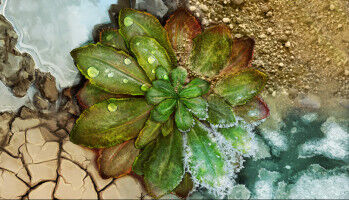
Mosses, deep-frozen
In the Life Sciences the safe long-term storage of living materials such as cells or whole organisms as well as their worldwide exchange between research groups is becoming more and more important. The The rapid advancements in modern Life Sciences are based on the analysis and modification of single cells, organs or whole organisms. In doing so, researchers not only alter specific genes but also investigate naturally occurring varieties in mutants or explore the genetic diversity which evolution has provided us with, in so called ecotypes. Researchers then communicate their new findings internationally in scientific publications. In order to independently validate these experiments other researchers require exactly the same living materials in their own laboratories. To promote this free exchange, more and more scientific journals demand that the cell lines and organisms described in a new publication are deposited in an international resource centre - as live materials. The University of Freiburg, Germany, has now closed a gap within this system of decentralised resource centres with the establishment of the "International Moss Stock Center (IMSC)" on its premises.