Moving dirt, and history
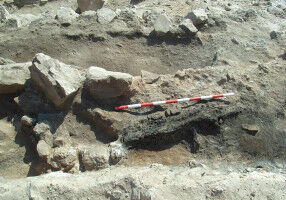
Moving dirt, and history Student interested in archaeology spent summer on Peruvian dig This is the ninth in a series of stories about Harvard's engagement in Latin America. "There is an art to sweeping," the instructor said. "You are not merely trying to move the dirt around; you are trying to uncover what is below, to make it visible so that we can look for patterns across the floor." I wasn't working for a landscaping company or at an industrial cleaning firm. As part of the Harvard Summer School Study Abroad Program , I was excavating at one of the best-known Moche archaeological sites in Peru: The Archaeology Field School at San José de Moro. As part of a larger research-based excavation, the field school at Moro, run by Pontificia Universidad Católica del Perú with a Harvard program added on, brings researchers, students, and professors from all over the world to one place during June, July, and August. Under the tutelage of some of the leading Peruvian archaeologists and equally talented local workmen, students learn the basics of archaeological fieldwork. Moro was my first opportunity to experience what being a real field archaeologist would entail.