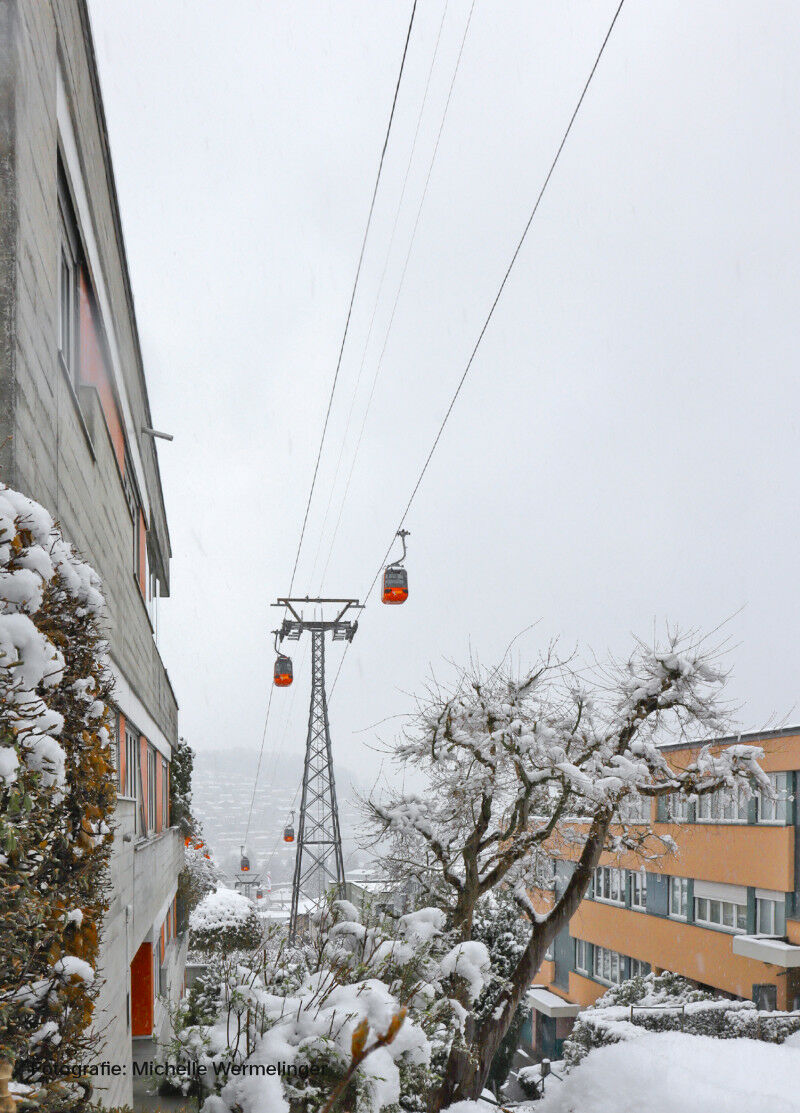
Planning processes in both urban and rural areas are becoming increasingly complex. Picture: Michelle Wermelinger
Planning processes in both urban and rural areas are becoming increasingly complex. Picture: Michelle Wermelinger The new Master's degree course in "Collaborative Spatial Development" will start at Lucerne University of Applied Sciences and Arts in fall 2024. The focus is on a future-oriented planning culture with which students from different disciplines shape complex, spatial transformation processes. Tabea Michaelis and Amelie-Theres Mayer, co-directors of the Master's program in Collaborative Spatial Development at HSLU - Climate change and the energy crisis, increasing urbanization, demographic change, changing mobility patterns and new digital technologies are shaping the world we live in. As a result, planning processes in both urban and rural areas are becoming increasingly complex and can no longer be handled solely by spatial planners, architects and landscape architects. Regardless of whether we are talking about immediate climate measures for neighborhoods or strategies for dealing with housing shortages in entire cantons, new forms of cooperation are required - and specialists are needed who can accompany these change processes. 'More than ever, the spatial development of the future needs interdisciplinary and transdisciplinary teams to find appropriate solutions to the current challenges,' says co-director of studies Tabea Michaelis.
TO READ THIS ARTICLE, CREATE YOUR ACCOUNT
And extend your reading, free of charge and with no commitment.