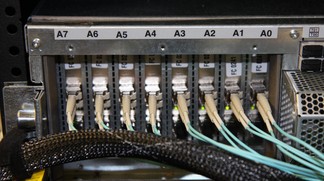
To handle large amounts of data from detailed brain models, IBM, EPFL, and ETH Zürich are collaborating on a new hybrid memory strategy for supercomputers. This will help the Blue Brain Project and the Human Brain Project achieve their goals. Motivated by extraordinary requirements for neuroscience, IBM Research, EPFL, and ETH Zürich through the Swiss National Supercomputing Center CSCS, are exploring how to combine different types of memory - DRAM, which is standard for computer memory, and flash memory that is akin to USB sticks - for less expensive and optimal supercomputing performance. The Blue Brain Project, for example, is building detailed models of the rodent brain based on vast amounts of information - incorporating experimental data and a large number of parameters - to describe each and every neuron and how they connect to each other. The building blocks of the simulation consist of realistic representations of individual neurons, including characteristics like shape, size, and electrical behavior. Given the roughly 70 million neurons in the brain of a mouse, a huge amount of data needs to be accessed for the simulation to run efficiently. "Data-intensive research has supercomputer requirements that go well beyond high computational power," says EPFL researcher Felix Schürmann of the Blue Brain Project in Lausanne.
TO READ THIS ARTICLE, CREATE YOUR ACCOUNT
And extend your reading, free of charge and with no commitment.
Your Benefits
- Access to all content
- Receive newsmails for news and jobs
- Post ads