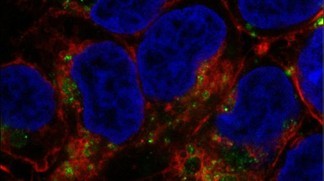
Selective neutralization of APP-C99 with monoclonal antibodies reduces the production of Alzheimer's Aβ peptides. The toxic amyloid-beta (Abeta) peptides involved in Alzheimer's disease (AD) are produced after processing of the amyloid precursor protein-C-terminal fragment APP-C99 by gamma-secretase. Thus, major therapeutic efforts have been focused on inhibiting the activity of this enzyme. However, recent human phase 3 clinical trials testing gamma-secretase inhibitors revealed adverse side effects attributed to impaired processing of the Notch-1 receptor, a gamma-secretase substrate critically involved in cell fate decisions. Here, the group of Patrick Fraering (CMSN - Molecular and Cellular Biology of Alzheimer's Disease ) report an innovative approach to selectively target the gamma-secretase-mediated processing of APP-C99 with monoclonal antibodies neutralizing this substrate. Generated by immunizing mice with natively folded APP-C99, these antibodies bind native epitopes of this substrate, and by steric hindrance significantly reduce Abeta production in cells as well as in a mouse model of AD. Together, these findings support APP-C99 substrate-targeting antibodies as new immunotherapeutic and Notch-sparing agents to lower the levels of Abeta peptides implicated in AD.
TO READ THIS ARTICLE, CREATE YOUR ACCOUNT
And extend your reading, free of charge and with no commitment.
Your Benefits
- Access to all content
- Receive newsmails for news and jobs
- Post ads