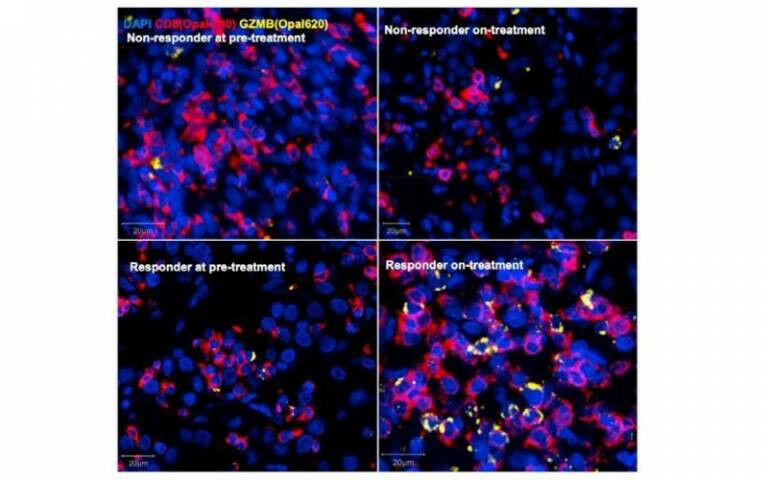
Images showing GZMB+ CD8+ cells
Images showing GZMB+ CD8+ cells - Immune cell patterns have been discovered within tumours that can help predict if patients with kidney cancer will respond to immunotherapy, as part of a study co-led by researchers at UCL, the Francis Crick Institute and The Royal Marsden NHS Foundation Trust. Clear cell renal cell carcinoma is the most common type of kidney cancer, accounting for around 75% of cases. Treatment often includes immunotherapy, drugs which help immune cells recognise and attack cancer cells. However, this does not always work and, for kidney cancers, there is no way to currently predict if it will be effective in an individual patient. In the study, published in Cancer Cell, scientists analysed 115 tumour samples from 15 people with metastatic clear cell renal cell carcinoma who received the immunotherapy drug nivolumab through the ADAPTeR clinical trial.* "Analysing multiple samples from each patient, both from different parts of the kidney tumour and from tumours that have spread to other organs, is critically important. It's known that molecular information in kidney cancer is distributed like a mosaic within the tumour - such that taking a single sample may not capture all the information needed for a comprehensive analysis," says Lewis Au, co-lead author, oncologist, and research fellow in the Cancer Dynamics Laboratory at the Crick. The researchers took tumour samples at various stages of cancer treatment: before immunotherapy, nine weeks after treatment started, after surgery when the tumour was removed, and if the treatment stopped working.
TO READ THIS ARTICLE, CREATE YOUR ACCOUNT
And extend your reading, free of charge and with no commitment.