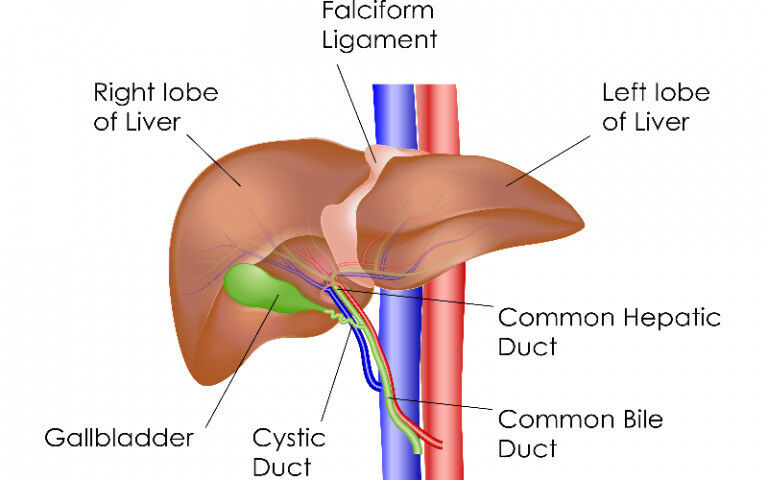
anatomy of the liver
anatomy of the liver - A new personalised cancer treatment can radically improve the outlook for some patients with bile duct cancer, finds an international multicentre trial involving researchers at UCL and University College London Hospitals NHS Trust (UCLH). The Phase II open label clinical trial - the European arm of which was led by UCL researchers - found that patients who were otherwise facing end of life care survived for up to two years when treated with the drug futibatinib. In September last year, data from the FOENIX-CCA2 trial led to the US Food and Drug Administration (FDA) to approve* futibatinib, although the UK's National Institute for Clinical Excellence has yet to consider the drug. Set across 13** countries, the trial was sponsored by Taiho Oncology, and the results have now been published in the New England Journal of Medicine. Futibatinib targets a particular genetic alteration, called FGFR2 fusion, which is found in around 14% of bile duct cancers. Of those diagnosed annually in the UK with bile duct cancer, which comprises cholangiocarcinoma and gall bladder cancer, approximately 300 will have this genetic alteration. There are very few treatment options for bile duct cancer and the survival is poor, with patients surviving on average for just 12 months.
TO READ THIS ARTICLE, CREATE YOUR ACCOUNT
And extend your reading, free of charge and with no commitment.