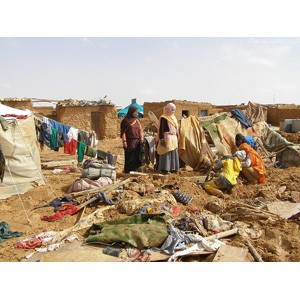
Refugees in the Western Sahara (from Saharauiak on Flickr)
A quarter of households in refugee camps in Algeria are currently suffering from the double burden of excess weight and under-nutrition. According to a study published in the journal PLOS Medicine , obesity is an emerging threat to this community, with half of women of childbearing age being overweight, whilst nutritional deficiencies such as iron-deficiency anaemia and stunted growth remain a persistent problem. The collaborative study by the UCL Institute of Child Health (ICH), the Emergency Nutrition Network (ENN), and the United Nations High Commissioner for Refugees (UNHCR), looked at the prevalence of the 'double burden' of malnutrition - under-nutrition and obesity - among Western Sahara (Sahrawi) refugees living in a prolonged emergency situation, who rely mostly on humanitarian food assistance for survival. Over 1,600 children and 1,700 women from 2,005 households took part in a routine UNHCR nutrition survey in 2010, which collects and monitors health and nutrition indicators of refugee children under five and women of childbearing age (15-49 years). The Sahrawi refugees are based in four camps originally set up in 1975 near Tindouf city in Algeria. Many adults have, from birth, received food assistance as their main source of food, and their children are now the second or third generation living on a diet consisting mainly of refined starchy foods.
TO READ THIS ARTICLE, CREATE YOUR ACCOUNT
And extend your reading, free of charge and with no commitment.