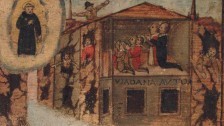
16th century votive offerings courtesy of Museo do San Nicola in Tolentino
Why did Renaissance shoppers fill their baskets with rosaries, crucifixes, Christ-dolls and devotional paintings? A new study by historian Mary Laven investigates the significance of Catholic clutter, as she explains. This was a world in which the Virgin and saints were regular visitors, and in which materialism could be good for the soul." - —Dr Mary Laven An earthquake ravages a small town in central Italy. Catastrophic fissures rip through the buildings; desperate cries can be heard from those whose houses are collapsing; others try to attract attention by standing on rooftops and waving their hands but to no avail. Only one home stands firm while the buildings all around it crumble to the ground. Here, the Viadana family kneels in quiet prayer; husband, wife and four sons, all neatly attired and strikingly tranquil amid the chaos, appeal to their local saint, Nicholas of Tolentino. This compelling image is preserved among the remarkable collection of ex votos at Tolentino, in the Marche region of central Italy: nearly 400 painted wooden boards, dating from the 15th to the 19th centuries, usually about a foot long and orientated horizontally, purchased or commissioned by those who had been granted a miracle thanks to the intervention of St Nicholas. Ex voto means 'in fulfilment of a vow' and the idea was that when one prayed to the Virgin Mary or to the saints for a miracle one would promise to leave an offering in return for a favour granted.
TO READ THIS ARTICLE, CREATE YOUR ACCOUNT
And extend your reading, free of charge and with no commitment.