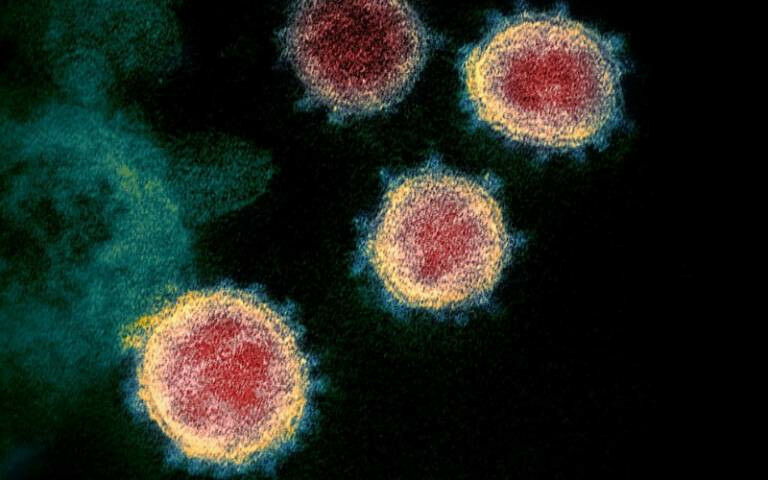
A microscopic vies of four coronaviruses.Novel Coronavirus SARS-CoV-2 Credit: NIAID-RML via Flickr , CC BY 2.0
A microscopic vies of four coronaviruses.Novel Coronavirus SARS-CoV-2 Credit: NIAID-RML via Flickr , CC BY 2. Early warning systems for infectious diseases must strengthen the links between public, community, animal and ecosystem health, writes Claudia Fernandez de Cordoba Farini (UCL Warning Research Centre) and Professor Ilan Kelman (UCL Institute for Risk & Disaster Reduction). Covid-19 was not the first pandemic where people asked whether we were warned properly, whether governments acted on the warnings and what could have been done differently. SARS swept the world in 2002-04, yet we were ill-equipped to respond when Covid-19, the second coronavirus pandemic within a generation, appeared just 15 years later. A study by UCL has found most infectious-disease warnings are set up to fail. Their design and implementation could be substantially improved. Out of 38 infectious-disease warning systems identified in the UCL study, 33 monitored health threats only after they had reached animal or human populations.
TO READ THIS ARTICLE, CREATE YOUR ACCOUNT
And extend your reading, free of charge and with no commitment.