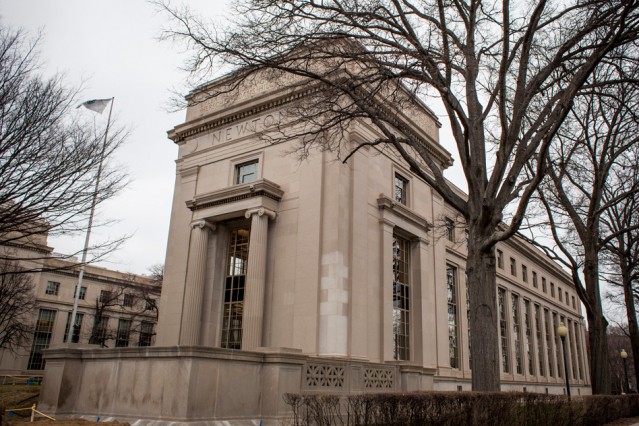
"The Main Group is one of the most important historic architectural facilities in Cambridge," says Richard Amster, MIT’s director of campus construction. "We had to preserve or mimic the original appearance."
The MIT campus Main Group buildings, which celebrate their 100th anniversary this year, were a marvel of modern construction when they were designed and built a century ago. But some things have changed in the ensuing decades, including an increased awareness of the need for energy efficiency in a world facing climate change. Fortunately, technology has also advanced during that time, making feasible a highly efficient retrofit of the old buildings. Not that such improvements, including replacement of the soaring and architecturally impressive windows in this complex of neoclassical buildings that frame MIT's main dome, is an easy task. In fact, the newly completed first stage of renovation - entailing a complete restoration of Building 2, which houses the Department of Mathematics - includes the largest installation of a new kind of ultra-efficient window ever carried out in the United States. The process, starting with a detailed investigation of the building's original design and construction methods and materials, and a search for possible replacements, began a decade ago, explains Gary Tondorf-Dick, program manager for capital projects in MIT's Department of Facilities, who was a key advisor on the project. Replacing the historically important windows, which in many places soar three stories high, is not something that can be done with a quick trip to the nearest home-improvement store.
TO READ THIS ARTICLE, CREATE YOUR ACCOUNT
And extend your reading, free of charge and with no commitment.