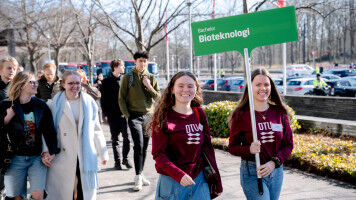
Sustainability Day 2025 was attended by a host of University of Bonn students and staff
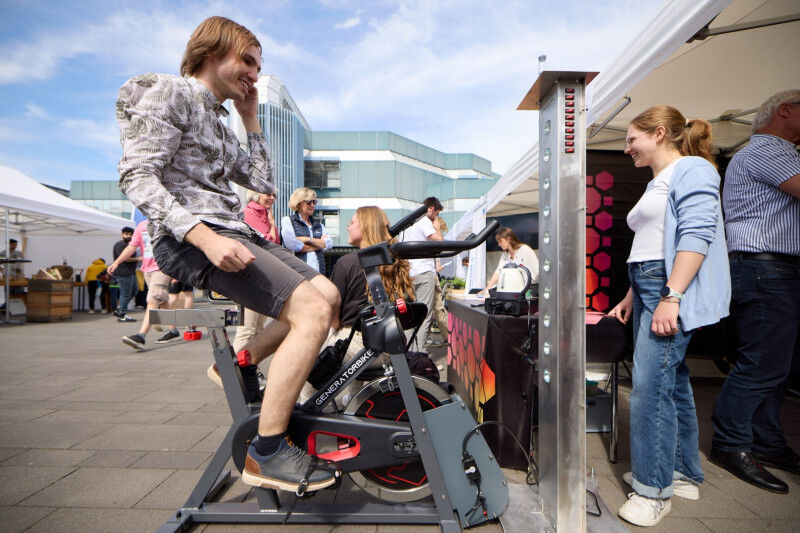
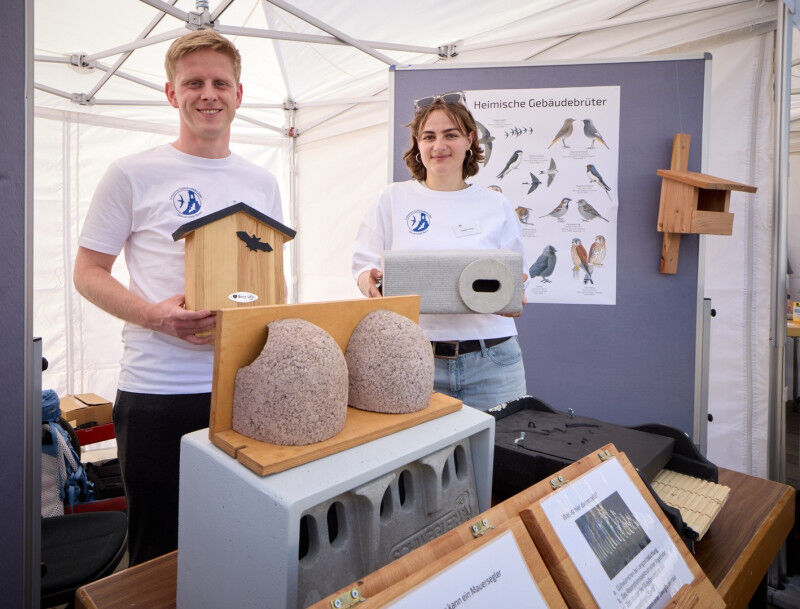
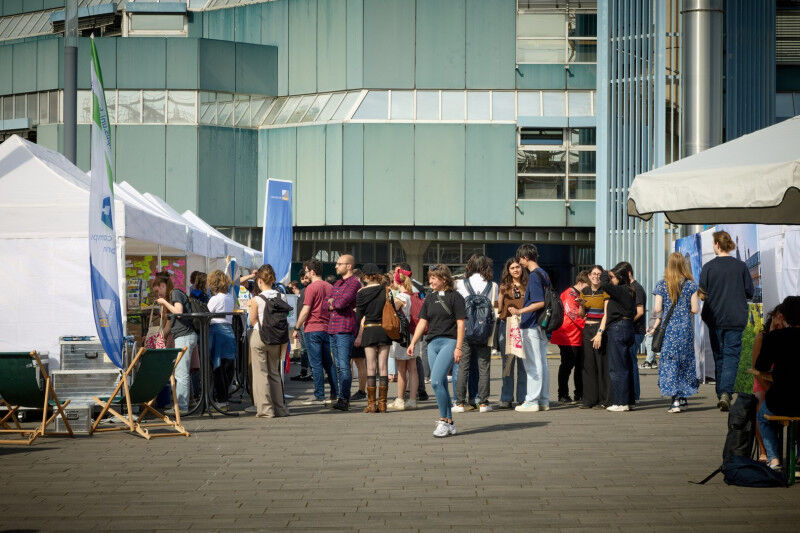
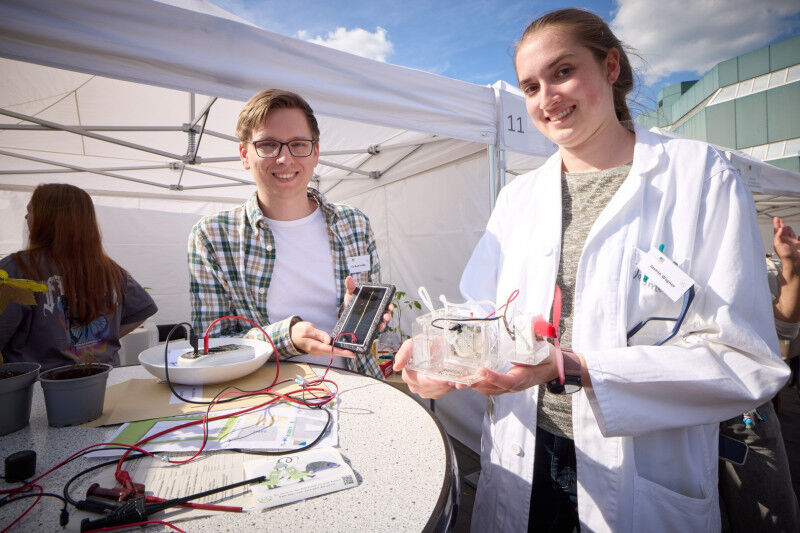
At the "Future Energy" stand of the Argelander Institute for Astronomy, a student pedaling an ergometer hard enough to work up a sweat generated enough energy to heat a connected kettle to make a cup of tea. Visitors at the stand of the Faculty of Medicine, a few meters further on, showed how to make storage boxes out of used Tetra Paks. Then at the Chemistry Department stand, a student conducted a little experiment in which she learned something interesting about renewable energies. The breadth of the University of Bonn’s commitment to sustainability was reflected in the many different stands and program events for Sustainability Day 2025. This year’s campaign day, held for the fourth time, was organized by Team N, comprised of the Vice Rectorate for Sustainability, the Sustainability Unit and the student-run Green Office.
Major interest in photovoltaic systems
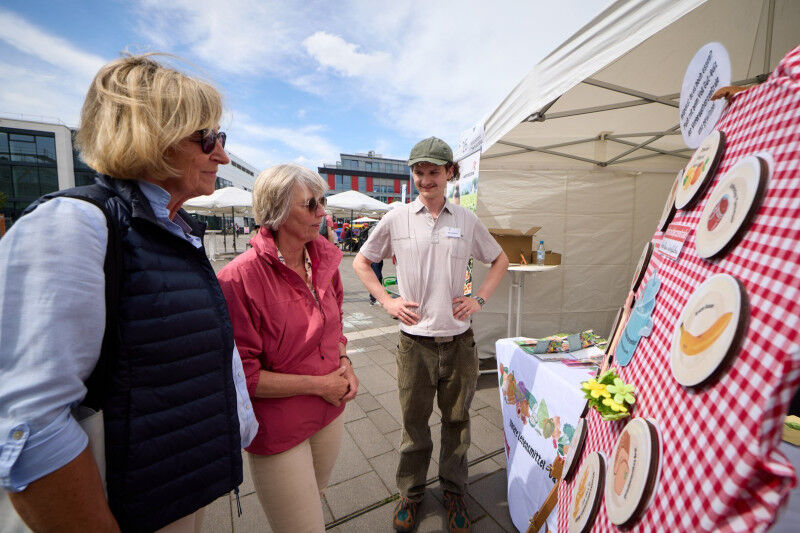
The University of Bonn has now set up seven PV systems, and "the eighth is currently under construction with a ninth one in planning," as Mostert noted. These generate 360,000 kWh of electricity annually, which is roughly enough to power 100 three-person households. The huge savings the University of Bonn is reaping through the ambitious Energy Strategy adopted in 2022 are even more significant. The goal back then was to reduce annual consumption by 20 percent, but this mark was in fact exceeded in some areas. In total, all these implemented measures together have saved nearly 18 million kWh of energy.
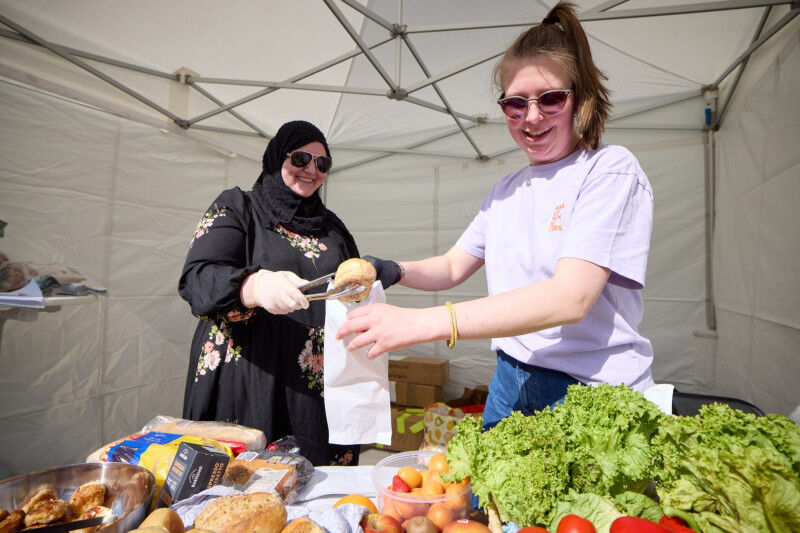
Resource waste avoidance was another topic at Sustainability Day, where Wertvoll NRW-an anti-food waste initiative of the Verbraucherzentrale NRW consumer association-had its stand. Visitors there got to learn in a playful way about the shelf life of various foods and how to tell if they are still edible. A pop-up "Fairteiler" ("fair share point") set up by Foodsharing Bonn was then the place to discover that foods are usually still good beyond their best-before date. Visitors there got to fill up and take home for free bags of rescued fruit, vegetables and baked goods in great variety, and even a few chocolate Easter bunnies.
The Coffee Bike was the spot to grab a nice, invigorating fair-trade coffee free of charge. The University of Bonn has been a certified "Fairtrade University" since 2020; thus fair trade is a key issue in general on campus. Fair trade is highly important to the Studierendenwerk as well, as all warm beverages served in the canteens are exclusively "fair-trade." Over 1,600 cups of fair-trade coffee, tea and hot chocolate are consumed on their premises on a daily basis.
Fair soccer tournament: Awareness-raising sporting event
Sustainability Day was rounded out by the fair soccer tournament as the day’s largest event, where five Human Table Soccer teams competed against each other, cheered on by a rapt audience. "Fair play" is of course important to the players themselves, but beyond that, the soccer balls were "fair-trade" too. Between matches, Professor Alexander Scheuch of the Department of Law, who specializes in association and sports law, interviewed several experts on the subject of sustainability in sports. The Sustainability Manager of soccer club 1. FC Köln, Frederik Becker, talked about what the club is doing to improve in terms of sustainability. Those efforts led to 1. FC Köln becoming the first club in Germany’s national soccer league to be certified under the ZNU Standard - Driving Sustainable Change, in the year 2020. "Partizan Neugrad" took first place in the fair soccer tournament, but every spectator was a winner too, for knowing more about the fair trade issues than they did before.