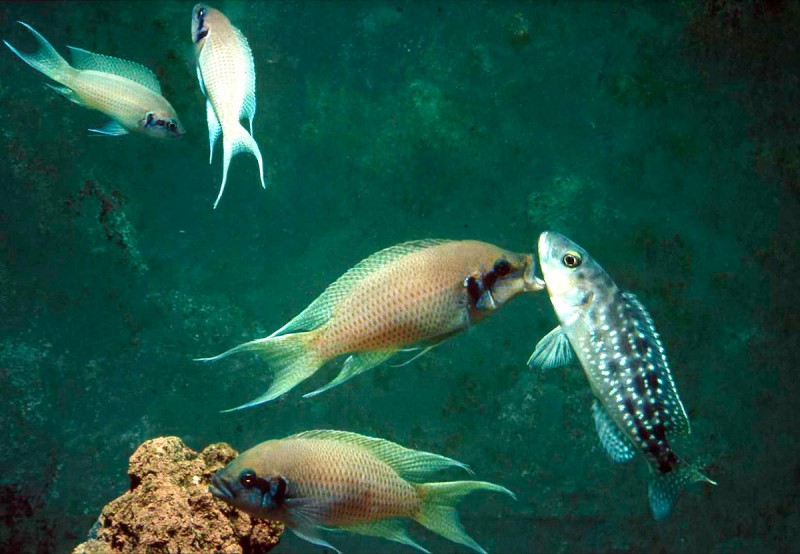
 A cichlid breeder attacks a predator.
Media releases, information for representatives of the media Media Relations (E) Variation in social organization and behavior of of highly social animals like cichlids is primarily explained by predation risk and related ecological factors. This stresses the significance of predation for social evolution. Sociality is a ubiquitous feature of life, but the reasons why animals cluster together can vary. In nature, there is great diversity in social organization and in the complexity of interactions among group members. It is widely accepted that high predation risk may select for group living, but predation is not regarded as an important driver of social complexity. This view neglects the important effect of predation on dispersal and offspring survival, which may require cooperation among group members. The significance of predation for the evolution of social complexity can be well illustrated by behavioural and morphological adaptations of highly social animals showing division of labour, such as ants and cooperatively breeding fishes like cichlids.
TO READ THIS ARTICLE, CREATE YOUR ACCOUNT
And extend your reading, free of charge and with no commitment.
Your Benefits
- Access to all content
- Receive newsmails for news and jobs
- Post ads